Best All‑in‑One Power Systems: For Vanlife, RVs & Overlanding
Updated:
All‑in‑one power systems simplify vanlife and RV electrical builds by combining batteries, charging, and distribution into one unit. They usually cost less and are safer, easier to install, and get you on the road faster than custom or DIY systems. This guide breaks down the main all‑in‑one system types and helps you choose the right fit for your build.
My opinions, not under contract. Uses affiliate links. Brands send some review items. See details
High DC Output Power Stations
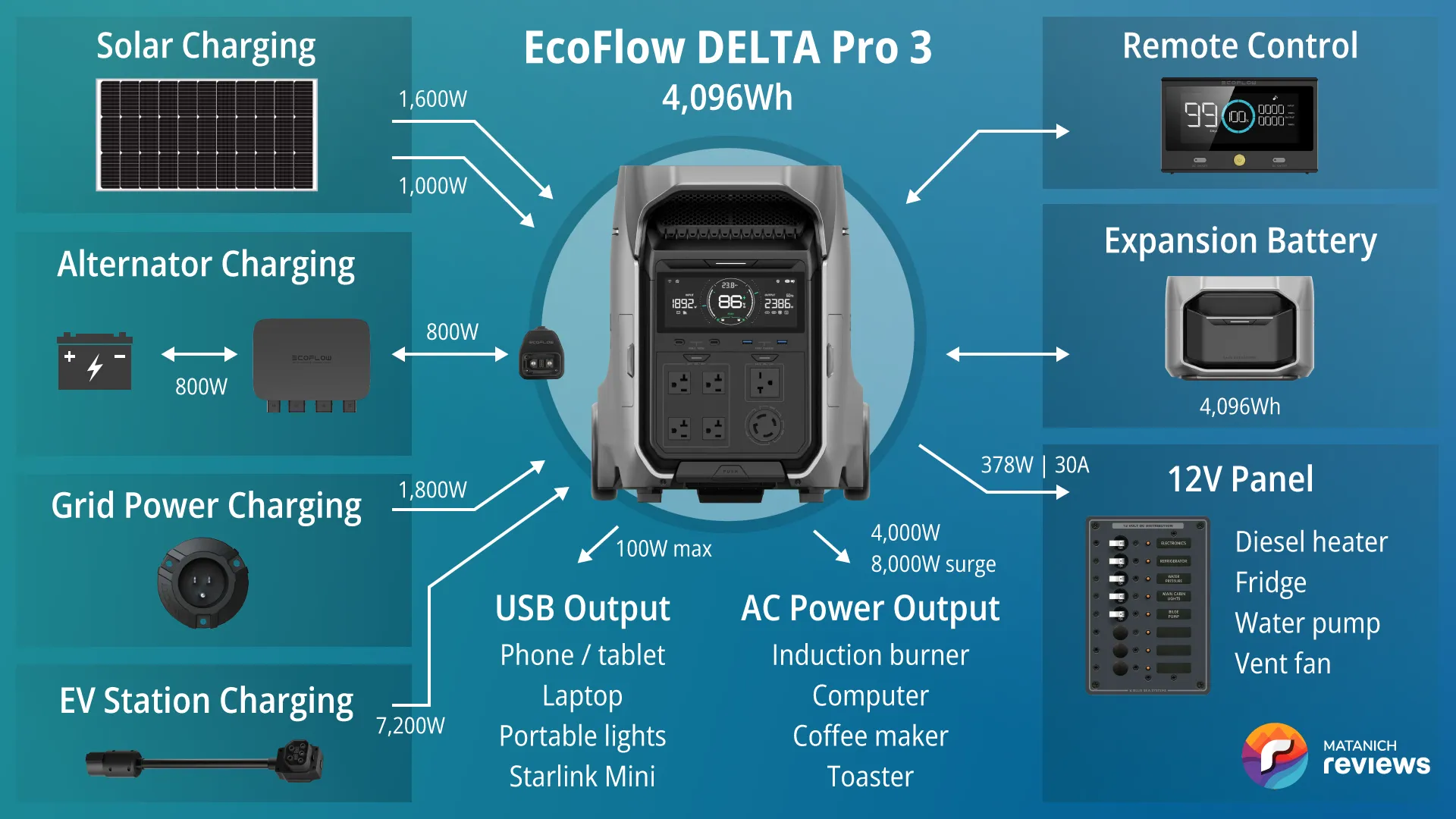
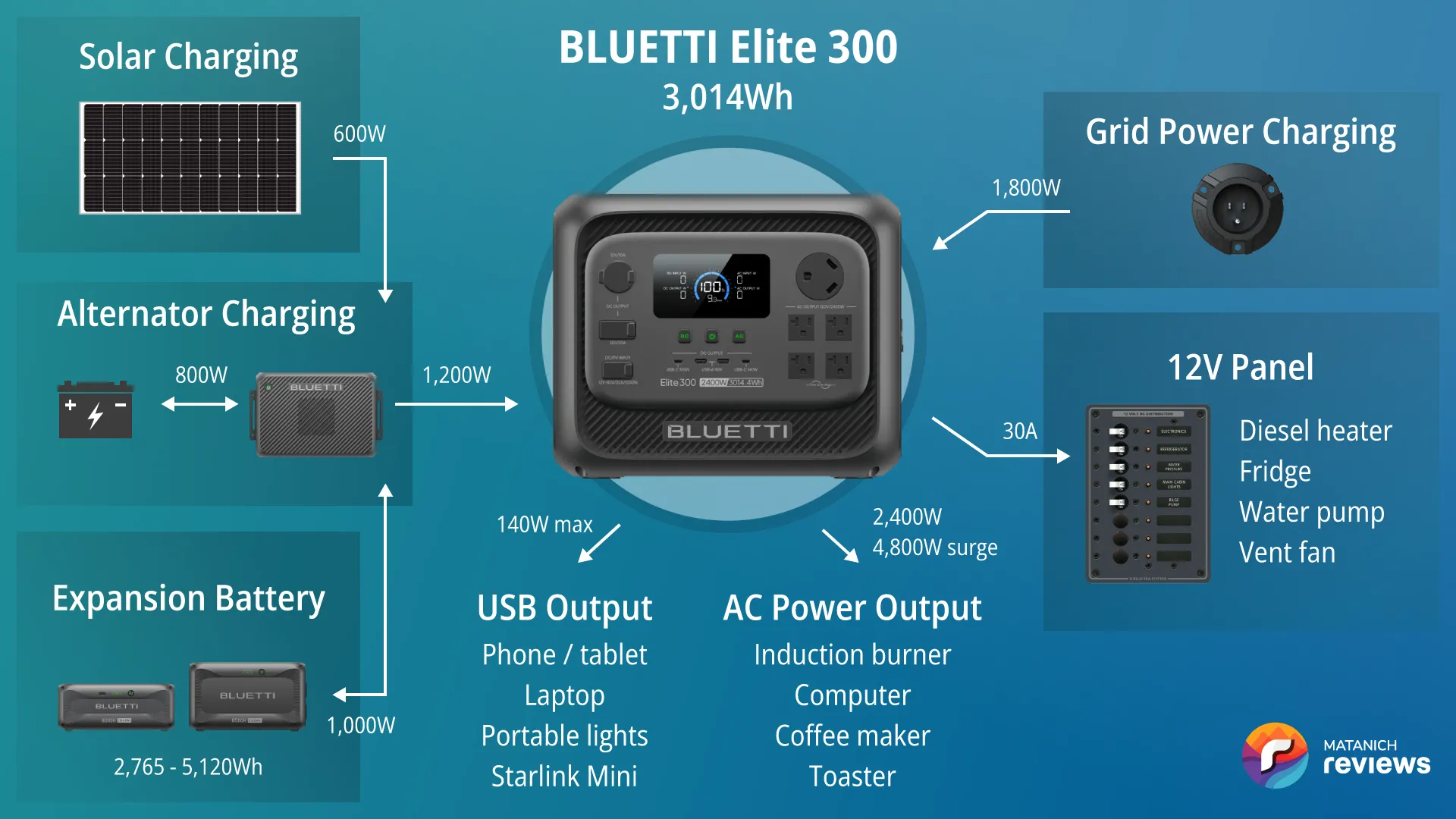
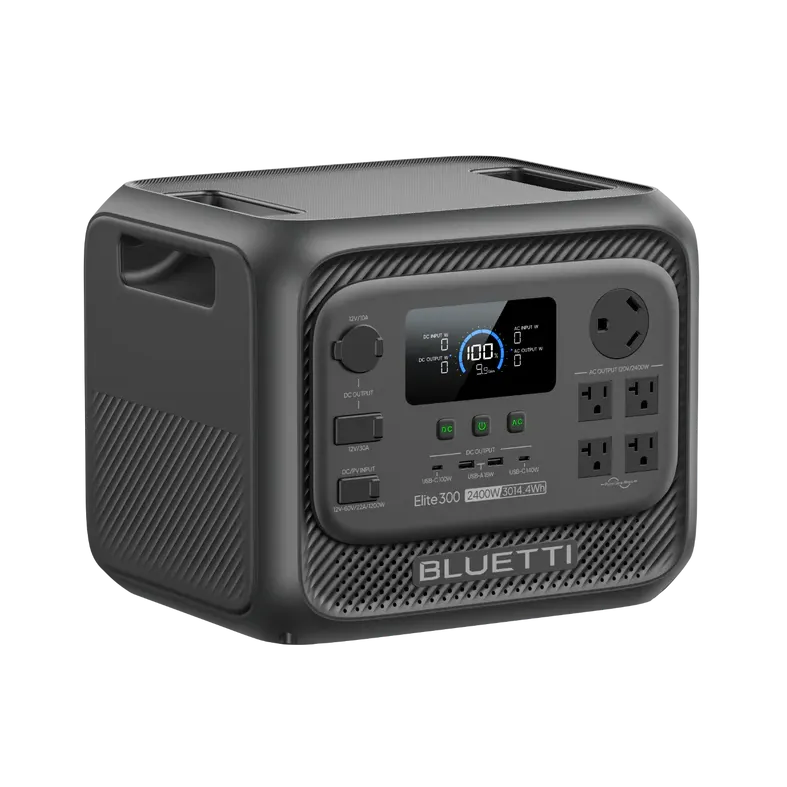
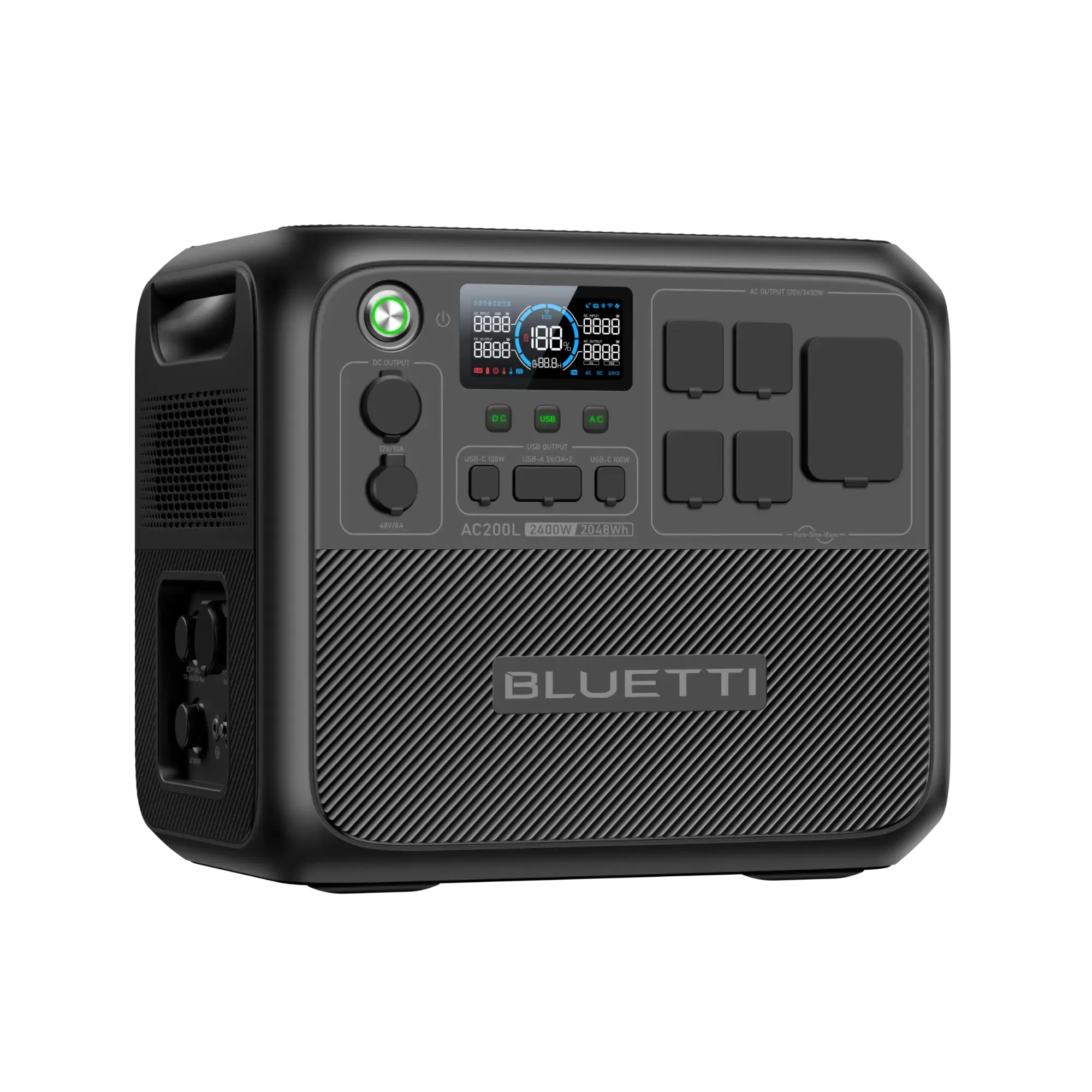
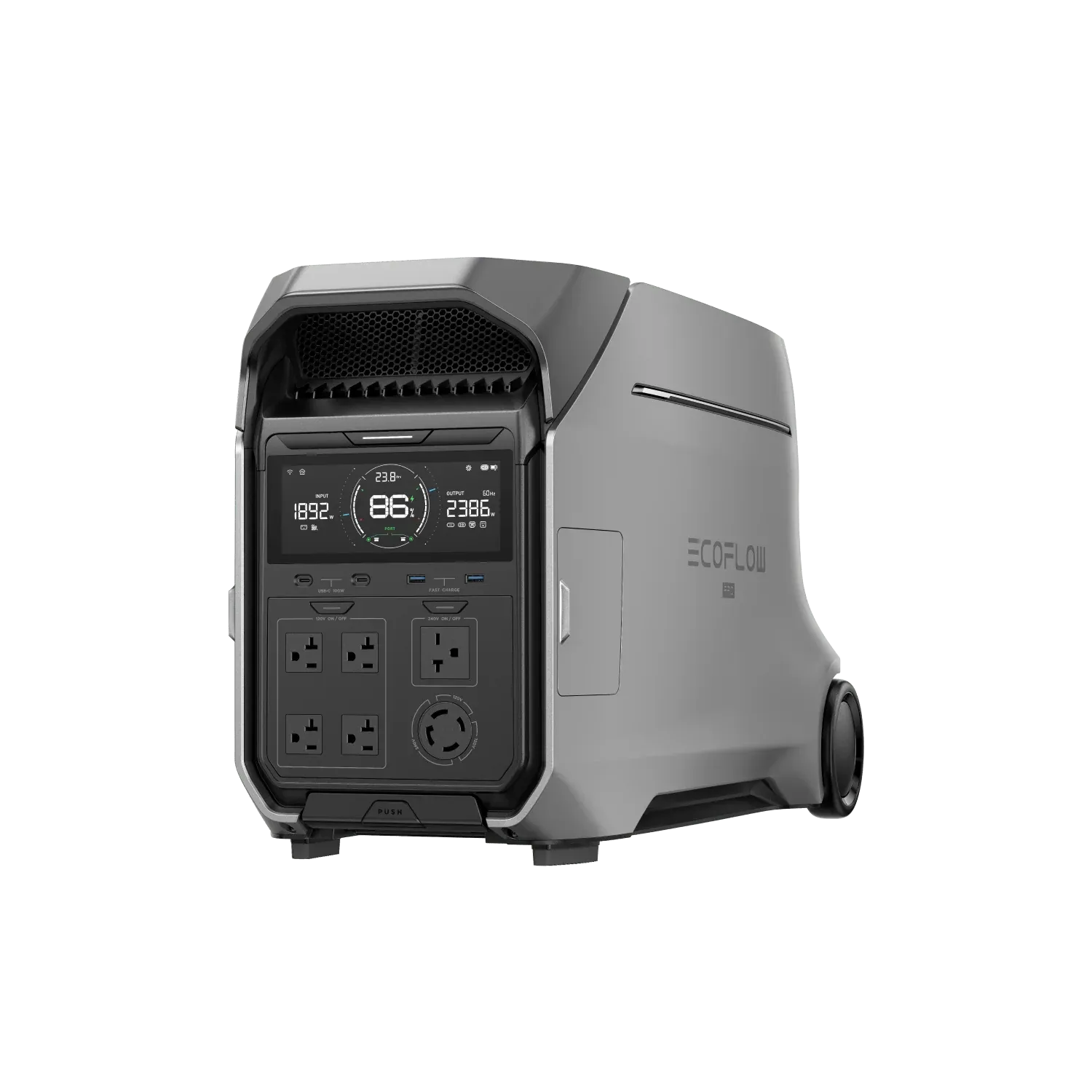
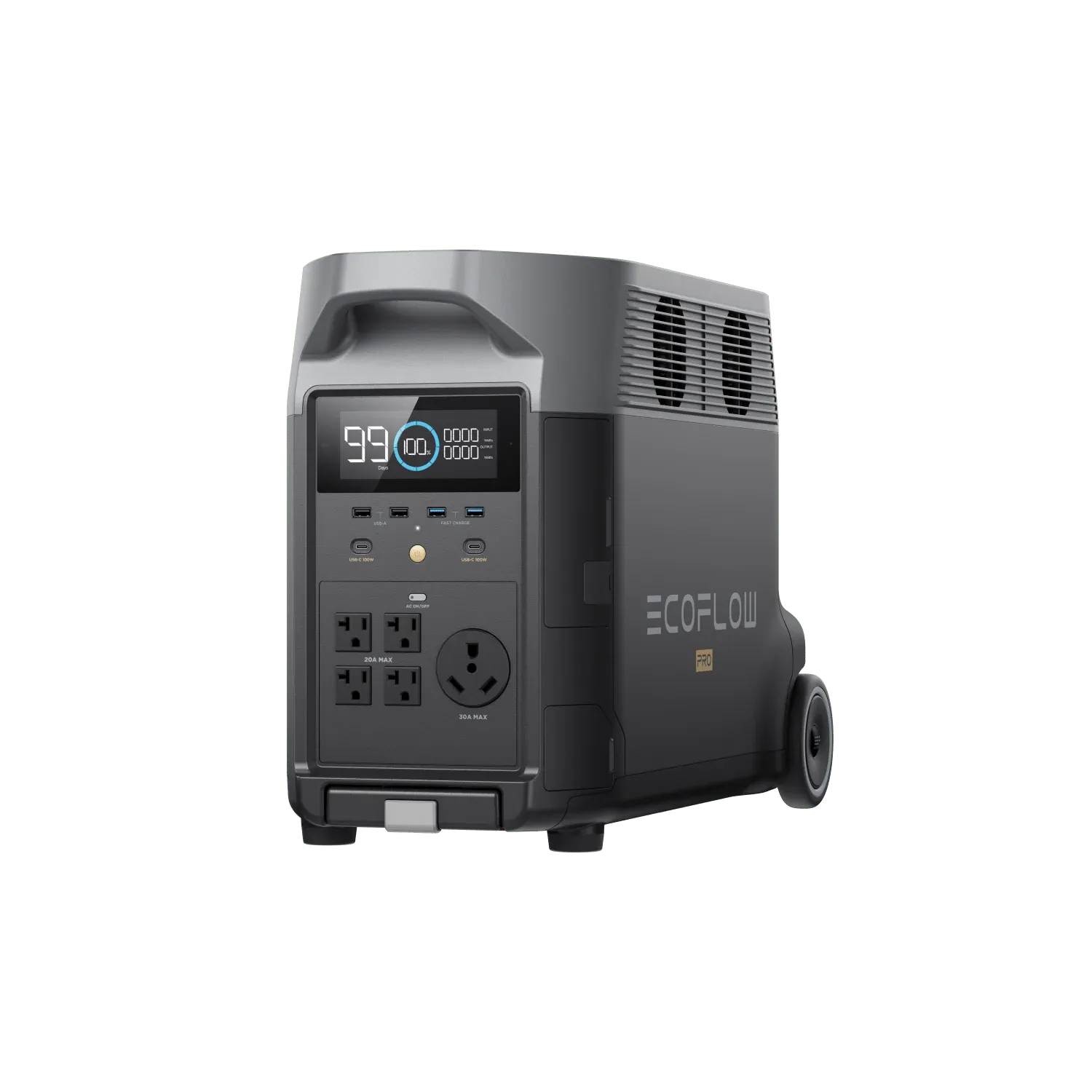
Power stations with a 30A or higher regulated DC output can support a complete 12V setup, including diesel heaters and water pumps. They replace multiple components with a single unit and require minimal wiring. They also save on cost because they are usually cheaper than assembling the same capability with individual components. For the price of a DIY system, many travelers could buy a second power station for redundancy, which is valuable if something fails while on the road.
Considerations
- Requires wiring for 12V circuits, including a fuse panel
- Expansion batteries (if available) are limited and usually brand‑specific
- Internal components cannot be replaced or upgraded
Popular High DC Output Power Stations
High DC output power stations are a small, standout group, and these are the models most people get excited about.
Products are sorted alphabetically by brand and then capacity.
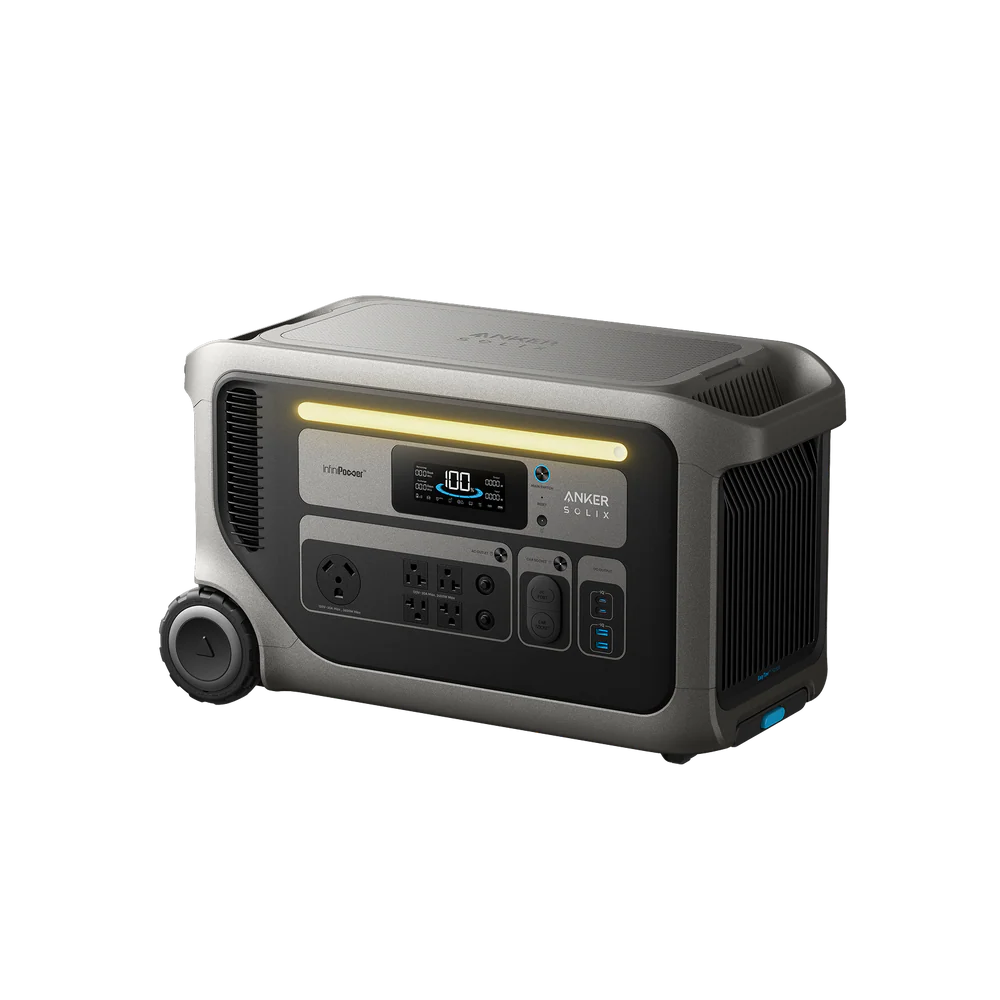
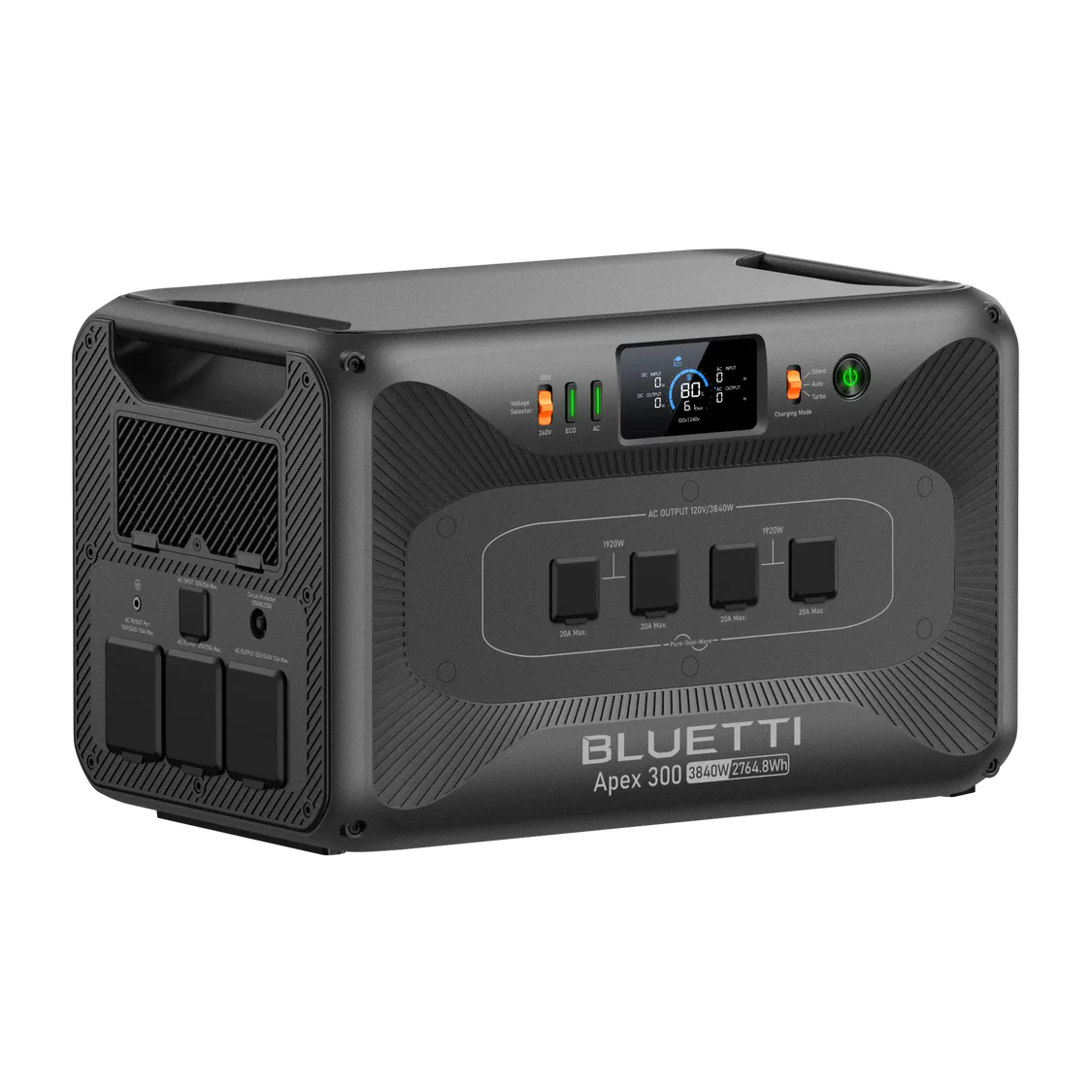
- Price
- $1,699
- Capacity
- 3,840Wh+
- AC Output
- 3,840W
- DC Output
- 0A, 50A 1
- Solar
- 1,200W (2x)
- Price
- $899
- Capacity
- 2,048Wh+
- AC Output
- 2,400W
- DC Output
- 10A, 50A 2
- Solar
- 1,200W
- Price
- $2,599
- Capacity
- 4,096Wh+
- AC Output
- 4,000W
- DC Output
- 30A
- Solar
- 1,600W + 1,000W
- Price
- $1,499
- Capacity
- 3,600Wh+
- AC Output
- 3,600W
- DC Output
- 30A
- Solar
- 1,600W
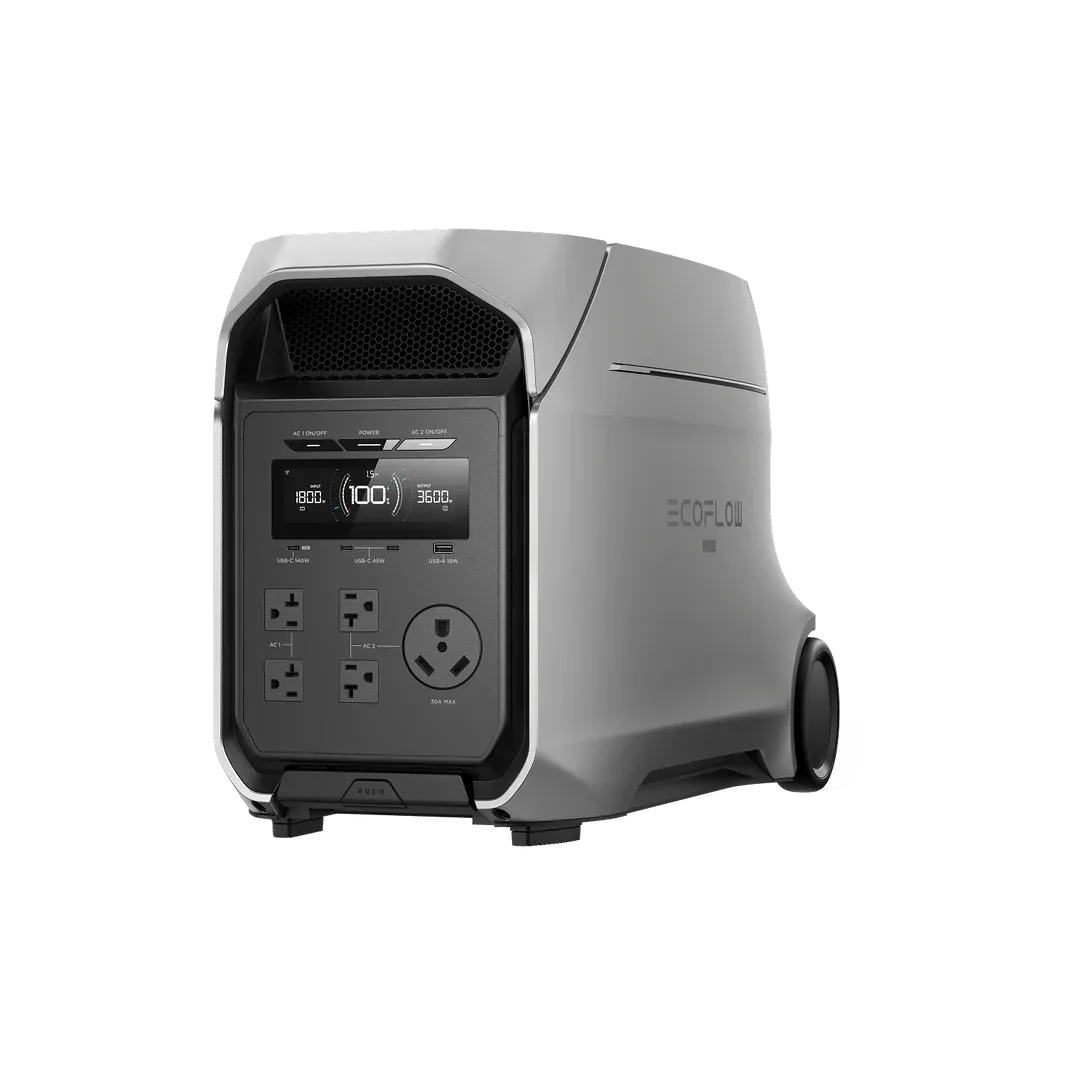
- Price
- $1,499
- Capacity
- 3,072Wh+
- AC Output
- 3,600W
- DC Output
- 30A
- Solar
- 800W (2x)
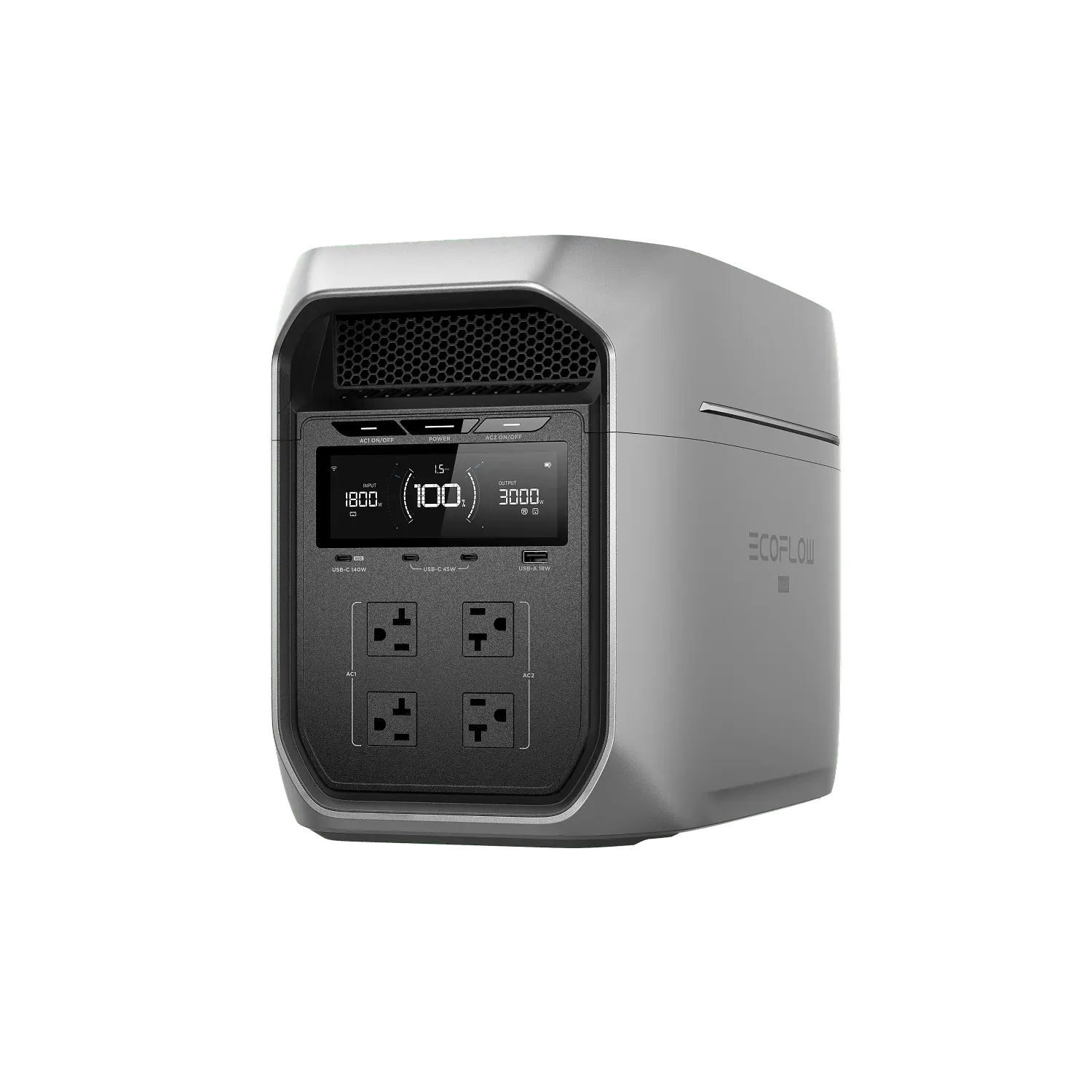
- Price
- $1,099
- Capacity
- 2,048Wh+
- AC Output
- 3,000W
- DC Output
- 30A
- Solar
- 500W (2x)
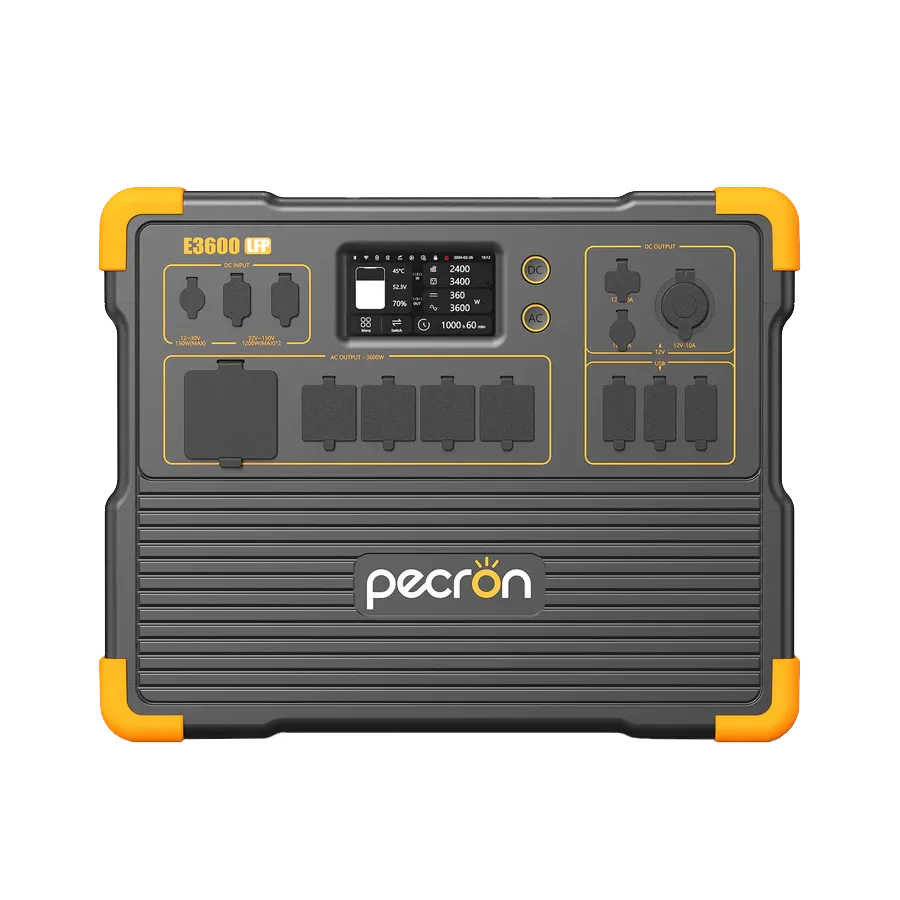
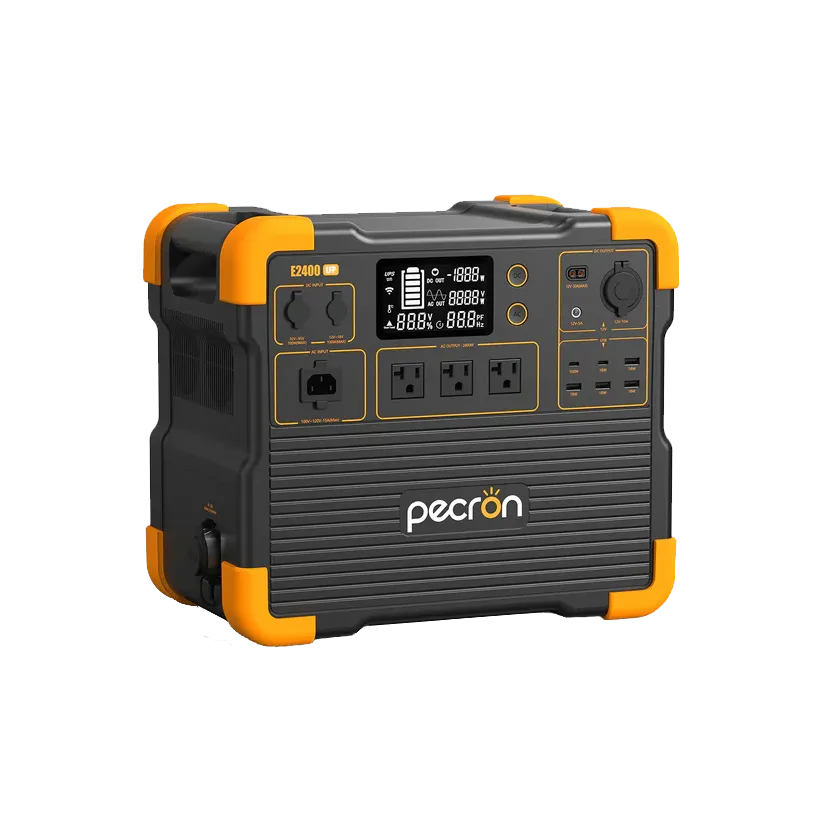
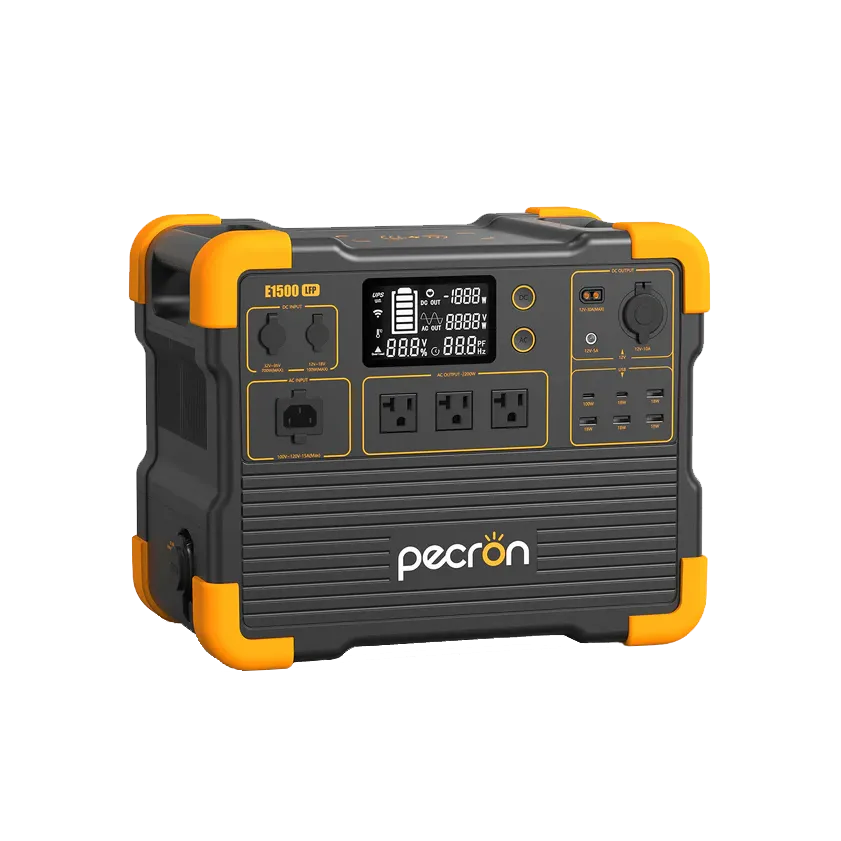
| Product | Price | Capacity | AC Output | DC Output | Solar |
|---|---|---|---|---|---|
| $1,299 | 3,072Wh+ | 3,600W | 30A | 1,600W 800W | |
| $1,699 | 3,840Wh+ | 3,840W | 0A, 50A 1 | 1,200W (2x) | |
| $1,199 | 3,014Wh | 2,400W | 30A | 1,200W | |
| $899 | 2,048Wh+ | 2,400W | 10A, 50A 2 | 1,200W | |
| $2,599 | 4,096Wh+ | 4,000W | 30A | 1,600W 1,000W | |
| $1,499 | 3,600Wh+ | 3,600W | 30A | 1,600W | |
| $1,499 | 3,072Wh+ | 3,600W | 30A | 800W (2x) | |
| $1,099 | 2,048Wh+ | 3,000W | 30A | 500W (2x) | |
| $3,400 | 3,993.6Wh+ | 3,600W | 30A | 3,000W | |
| $1,500 | 1,505.3Wh | 2,000W | 30A | 600W 300W | |
| $1,049 | 3,072Wh+ | 3,600W | 30A | 1,200W (2x) 150W | |
| $629 | 2,048Wh | 2,400W | 30A | 700W 100W | |
| $469 | 1,536Wh+ | 2,200W | 30A | 700W 100W |
1. Requires BLUETTI Hub D1 or BLUETTI Charger 2 + DC Hub. 2. Requires BLUETTI Charger 2 + DC Hub.
Adding a DC Fuse Panel
A DC fuse panel lets you run multiple 12V circuits (lights, fans, pumps, heaters, etc.) from a single power source. Basic power stations can support a small fuse panel if you stay within their 10A DC limit, while high‑output power stations are designed to run a full 12V system. Adding a fuse panel or DC breaker requires simple wiring but gives you safe circuit protection for reliable use.
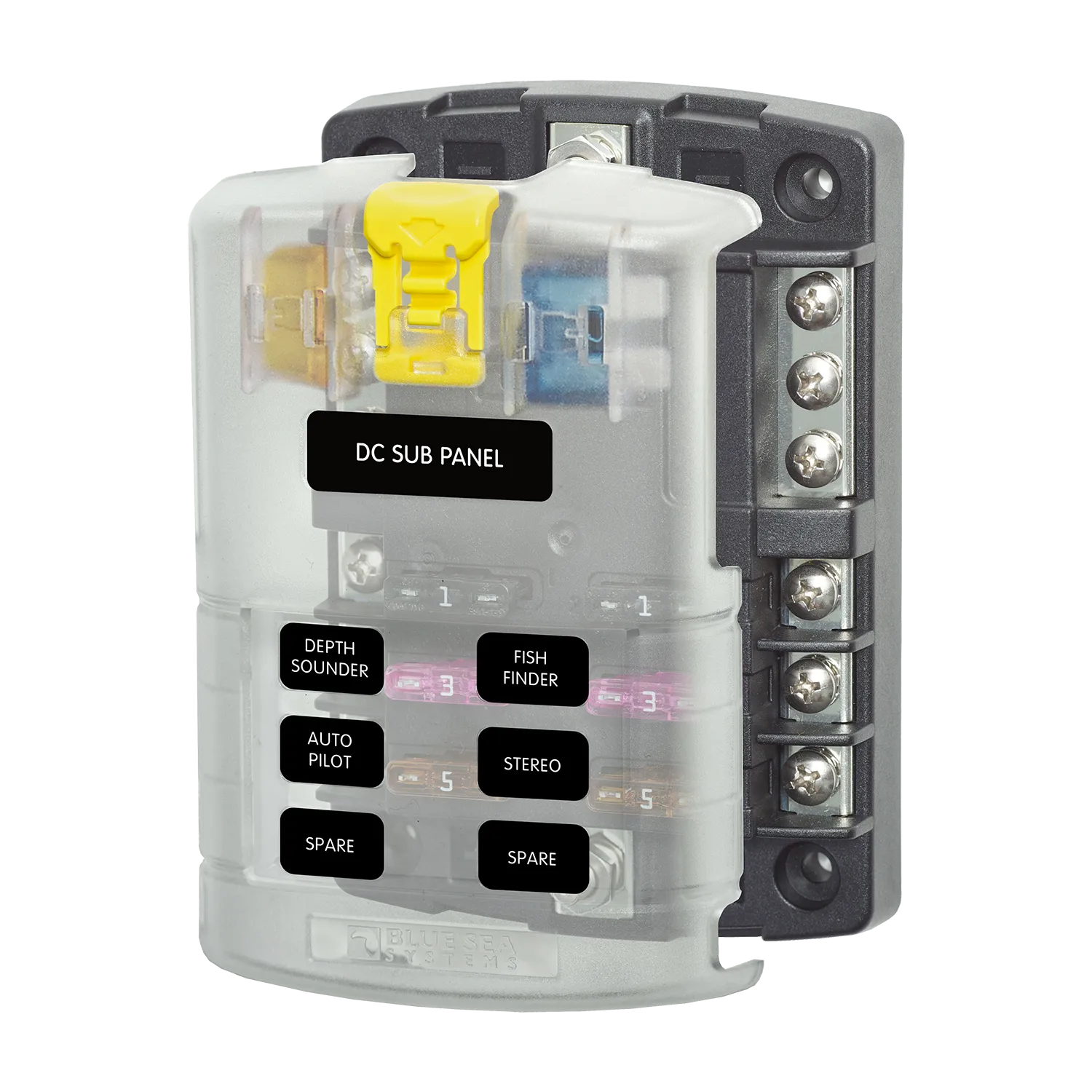 Fuse blockModel: Blue Sea Systems 5025
Circuits: 6
Price: $31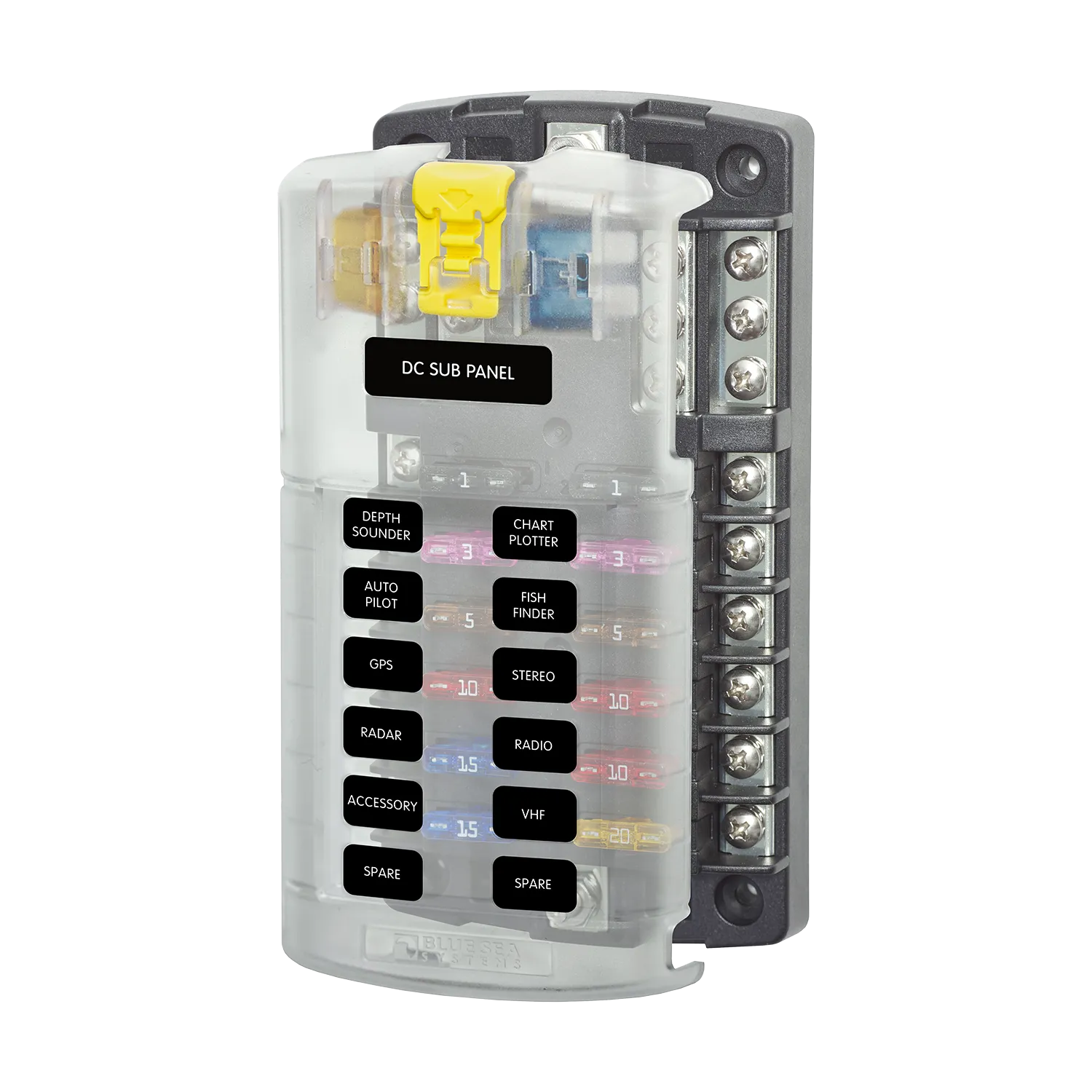 Fuse blockModel: Blue Sea Systems 5026
Circuits: 12
Price: $42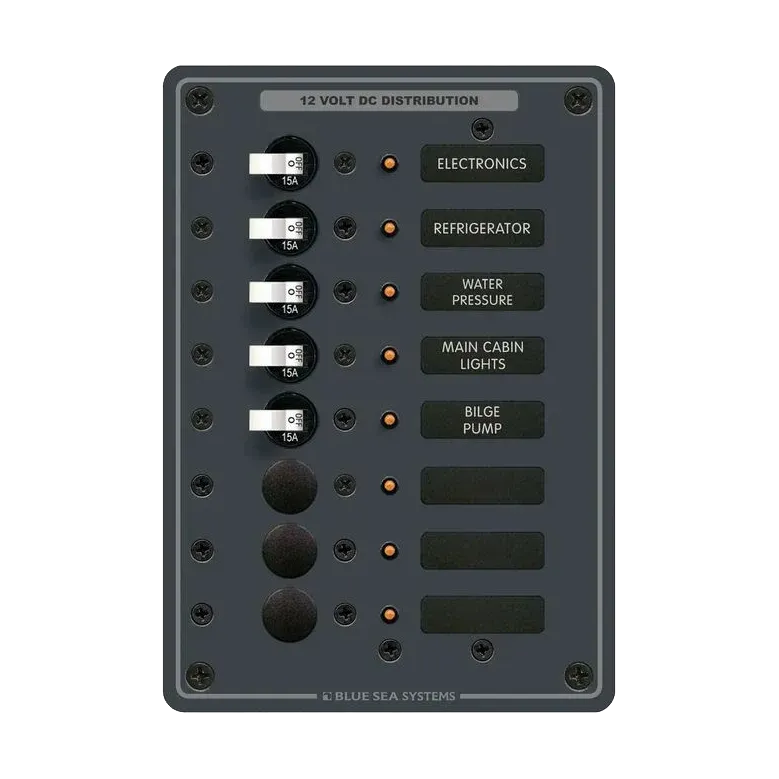 Circuit breakerModel: Blue Sea Systems 8023
Circuits: 8
Price: $327
Alternator Charging
A system is only as good as its ability to recharge. Most power stations and modular systems can charge from your vehicle’s alternator while you drive. See my Alternator Charger Guide for the fastest way to charge while driving. This is one of the fastest and most reliable ways to keep your system topped up, especially in cloudy weather.
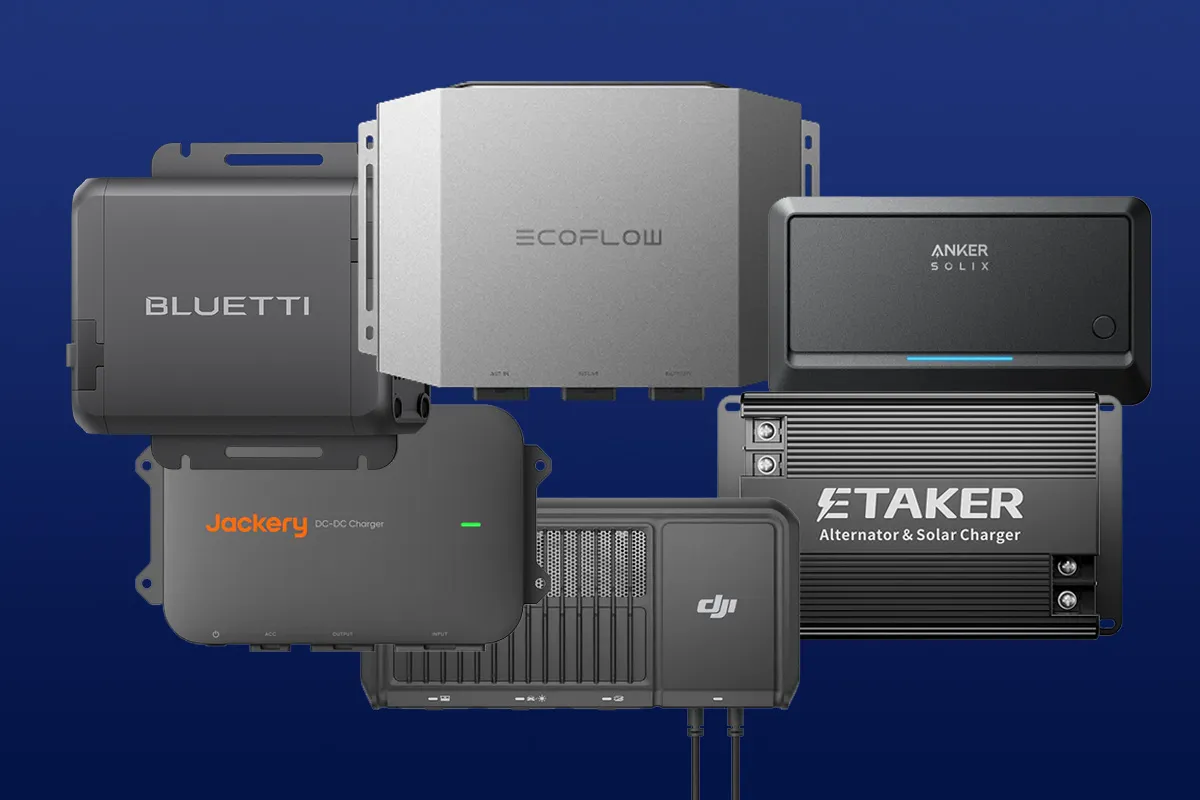
Alternator Chargers
Compare All Models and Brands
Modular Power Systems
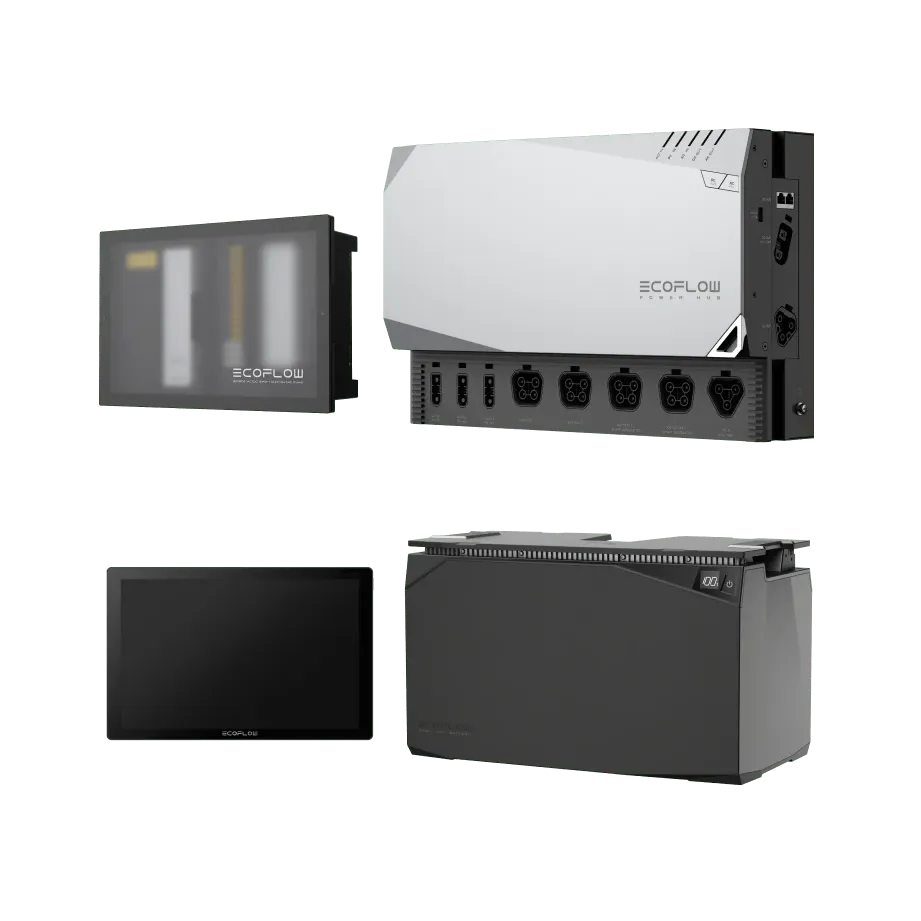
Modular power systems are designed to replace a full DIY electrical setup. They include separate batteries, fancy distribution panels, alternator charging, and solar charging in a unified ecosystem. These systems save time because the components are designed to seamlessly work together, include necessary cables, and reduce the amount of wiring and troubleshooting required. This improves safety and reduces stress both during installation and while traveling. Modular systems offer a clean, reliable long‑term solution for builds that want a structured electrical system without having to build a custom system.
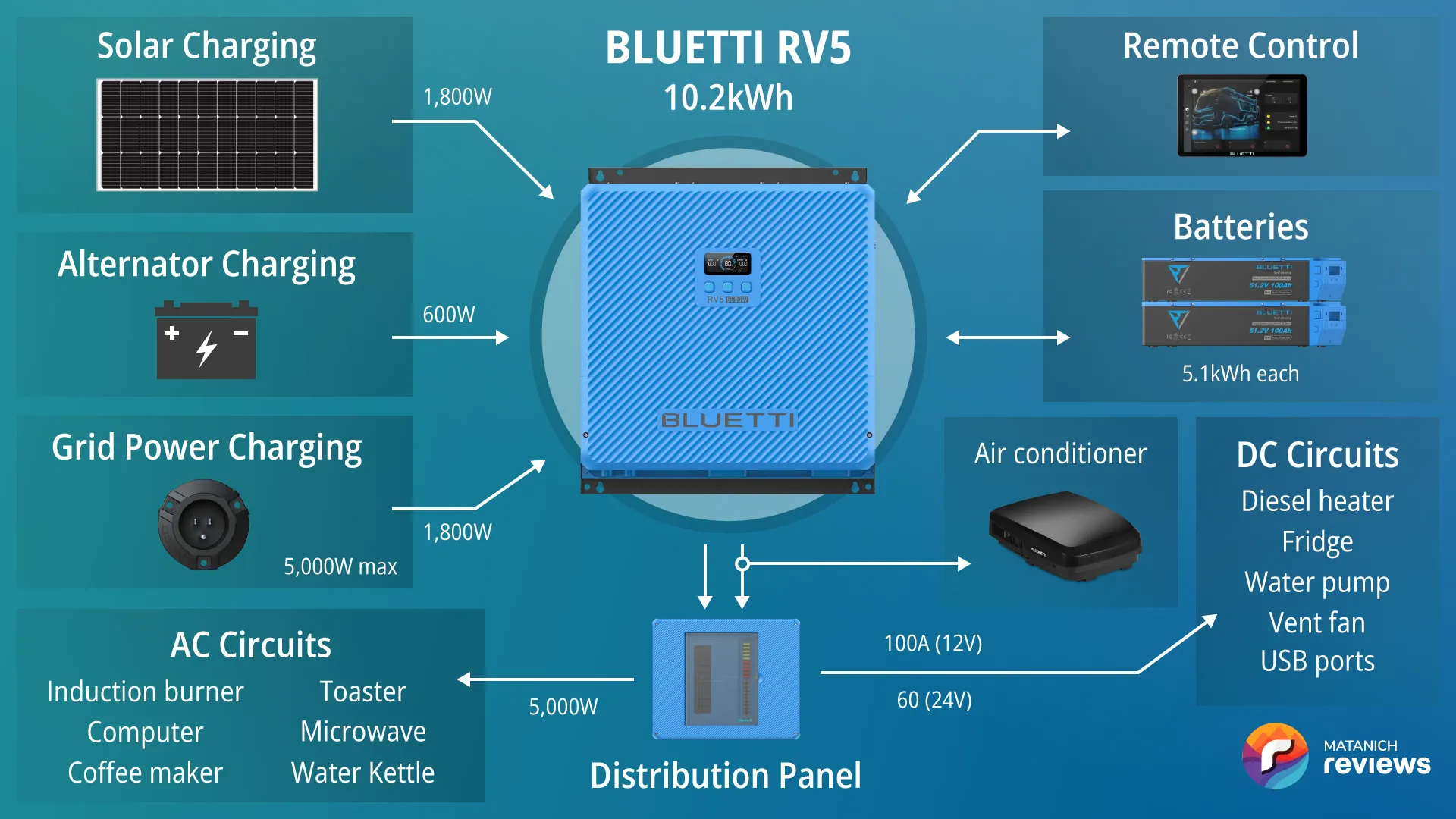
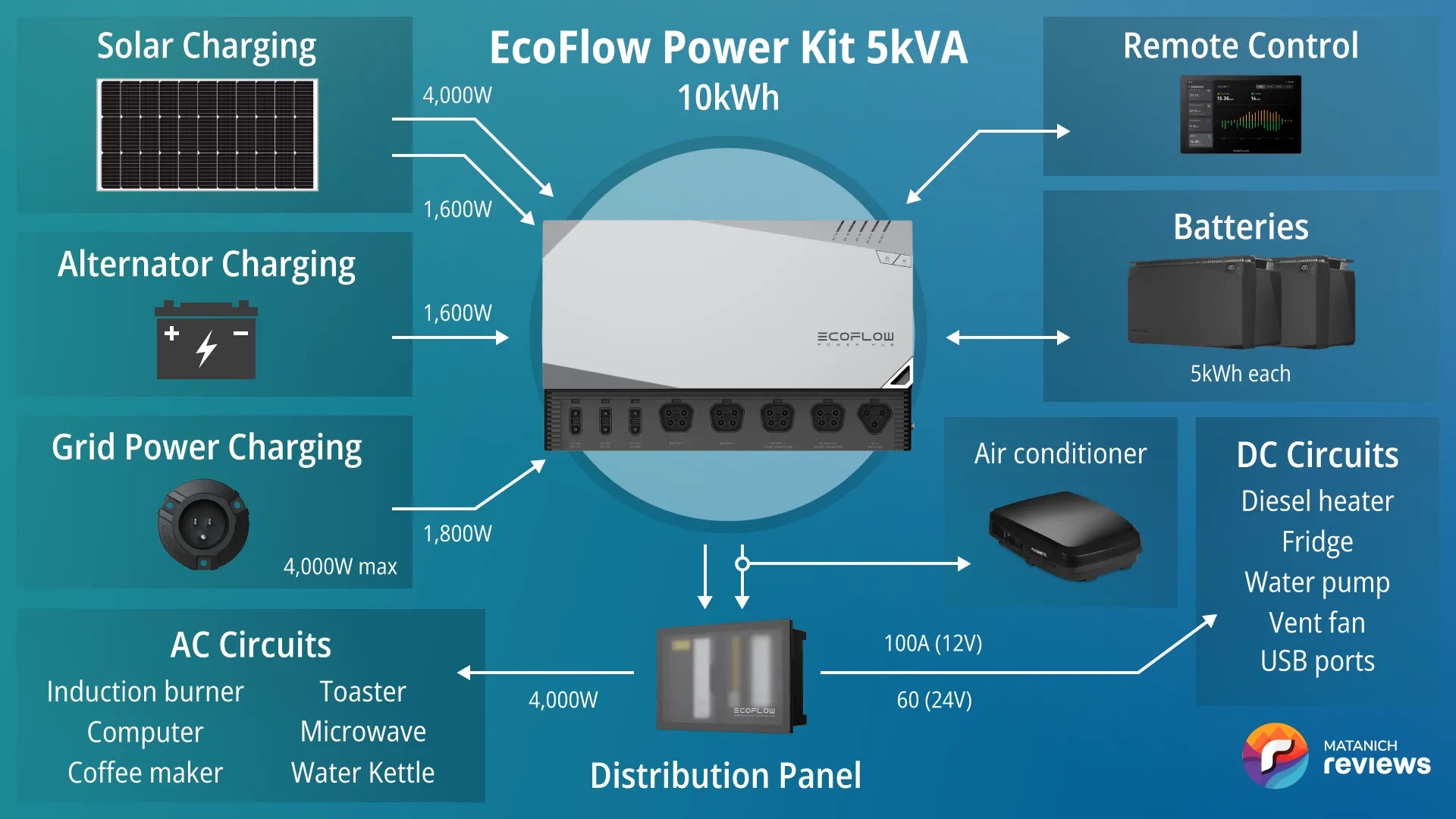
Considerations
- Higher upfront cost than power stations
- Less customizable than a full custom system
- Requires wiring for both AC and DC circuits
Popular Modular Power Systems
This is a newer category with only a few systems, and many builders are surprised by how capable they are.
Products are sorted alphabetically by brand and then capacity.
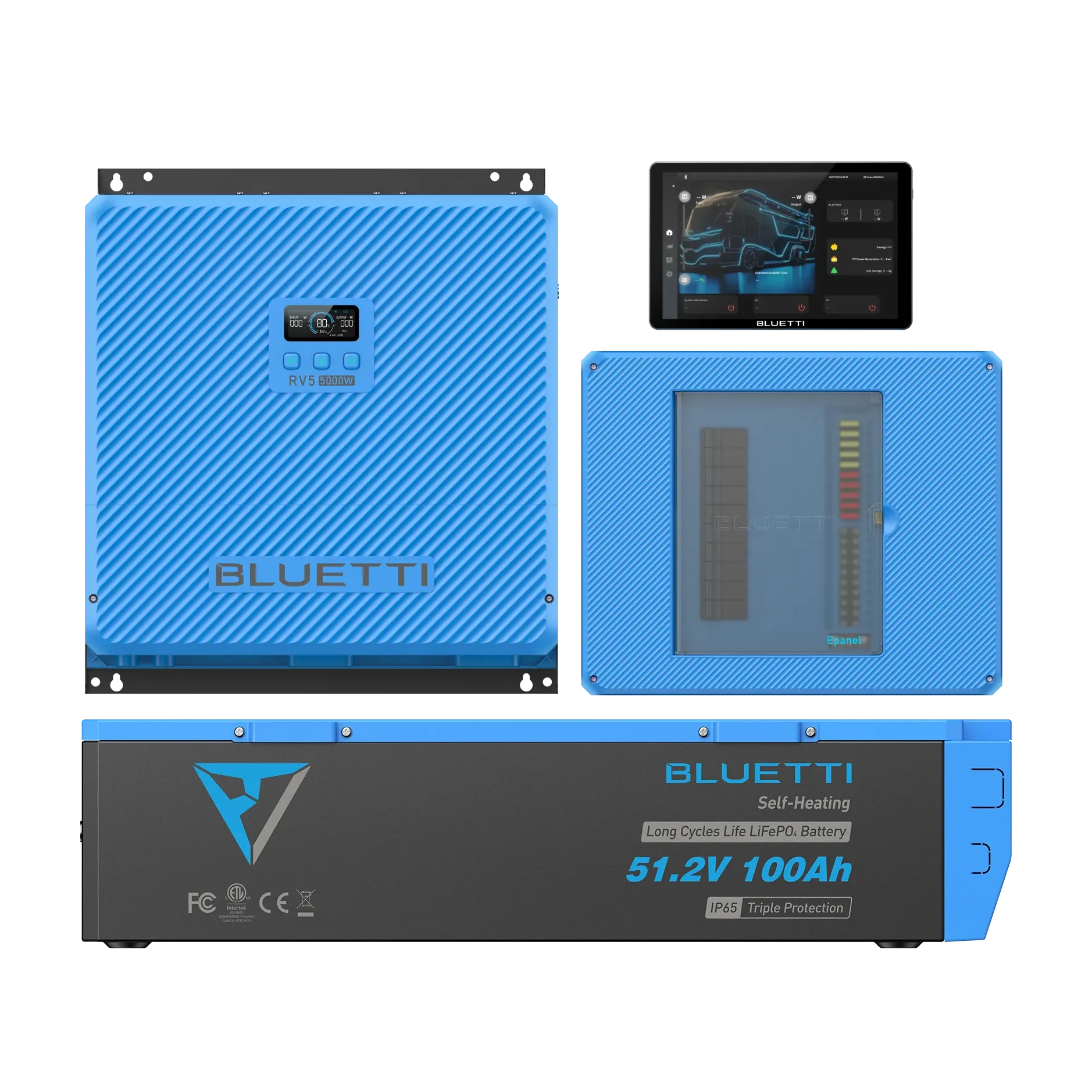
- Price
- $3,999
- Capacity
- 5.1-122.9kWh
- AC Output
- 5,000W
- DC Output
- 100A
- Solar
- 1,800W (2x)
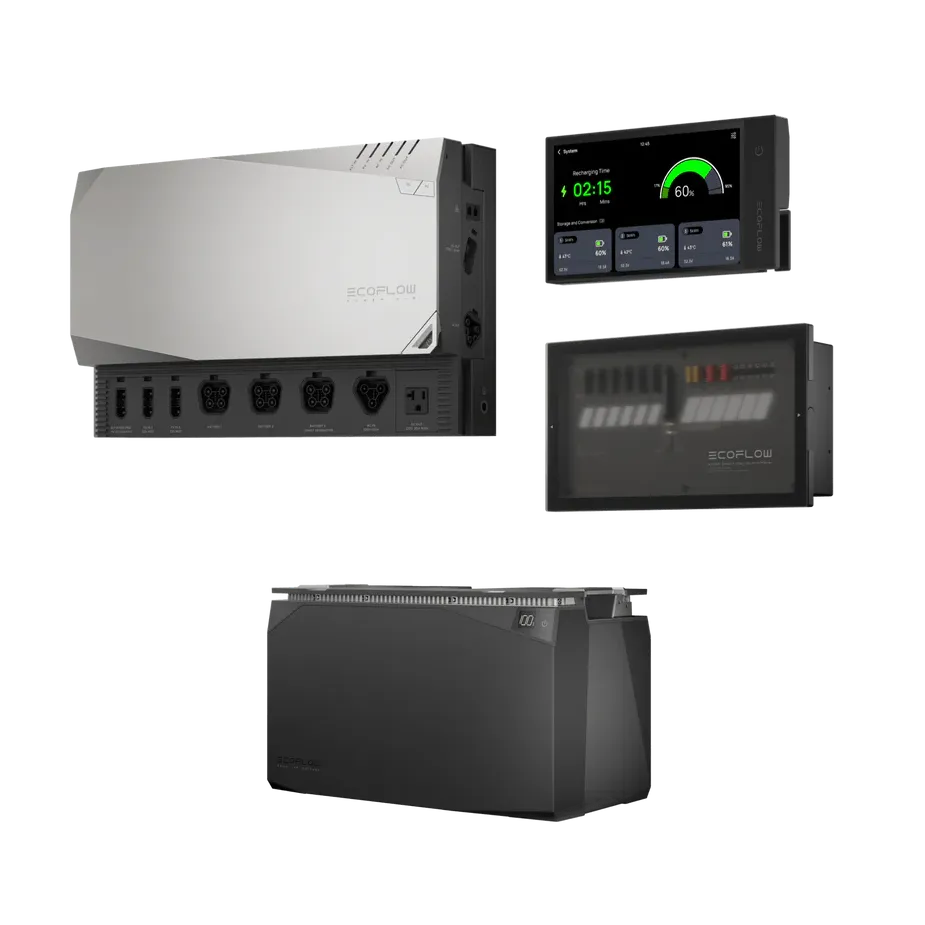
- Price
- $8,699
- Capacity
- 2-46.1kWh
- AC Output
- 3,600W
- DC Output
- 70A 1
- Solar
- 1,600W (3x)
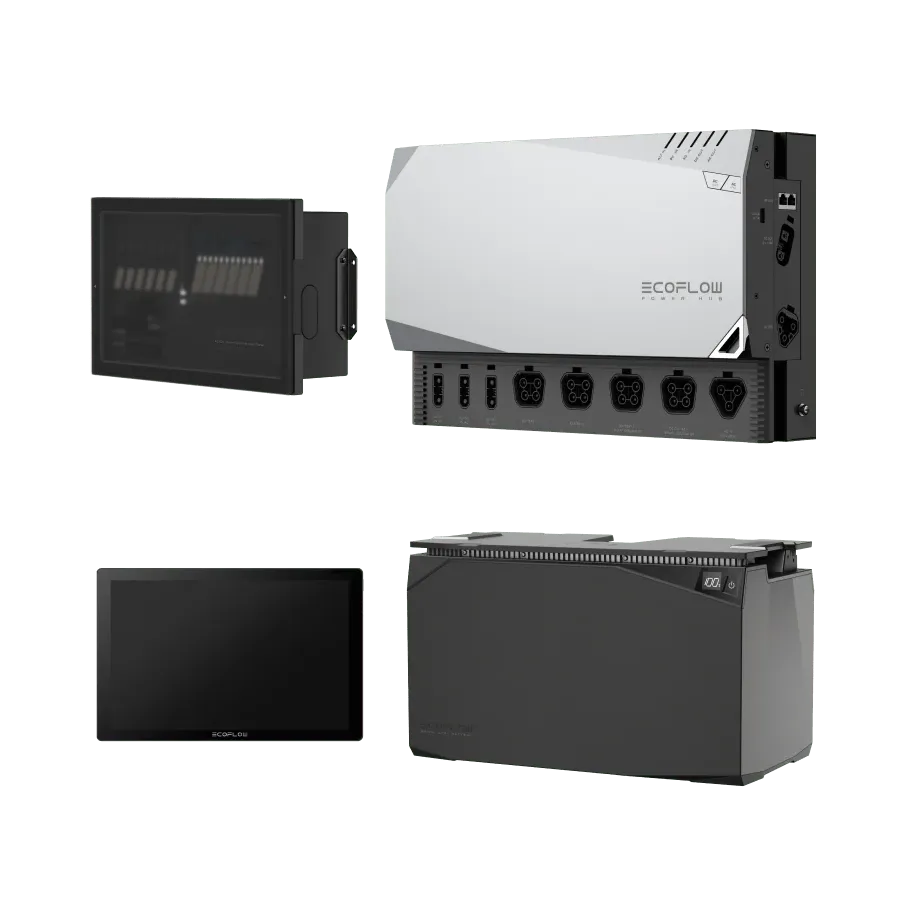
- Price
- $8,246
- Capacity
- 2-46.1kWh
- AC Output
- 4,000W
- DC Output
- 70A 1
- Solar
- 4,000W + 1,600W (2x)
- Price
- $8,296
- Capacity
- 2-46.1kWh
- AC Output
- 4,000W
- DC Output
- 100A 2
- Solar
- 4,000W + 1,600W (2x)
| Product | Price | Capacity | AC Output | DC Output | Solar |
|---|---|---|---|---|---|
| $3,999 | 5.1-122.9kWh | 5,000W | 100A | 1,800W (2x) | |
| $8,699 | 2-46.1kWh | 3,600W | 70A 1 | 1,600W (3x) | |
| $8,246 | 2-46.1kWh | 4,000W | 70A 1 | 4,000W 1,600W (2x) | |
| $8,296 | 2-46.1kWh | 4,000W | 100A 2 | 4,000W 1,600W (2x) |
1. Circuits 1–2 provide up to 30A each, while Circuits 3–6 provide up to 20A each. 2. Circuits 1–13 provide up to 30A each, while Circuits 14–16 provide up to 50A each.
Basic Power Stations
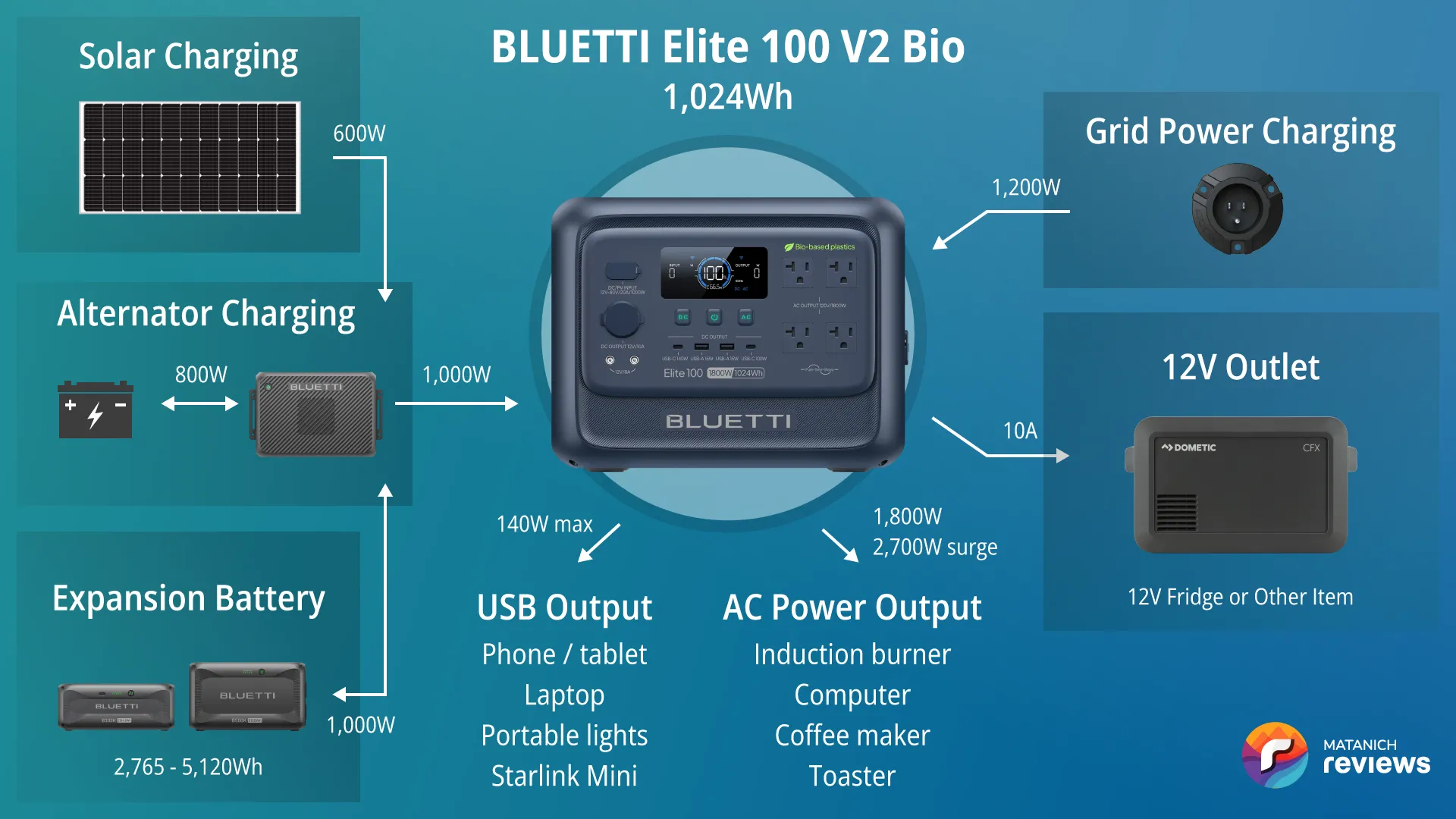
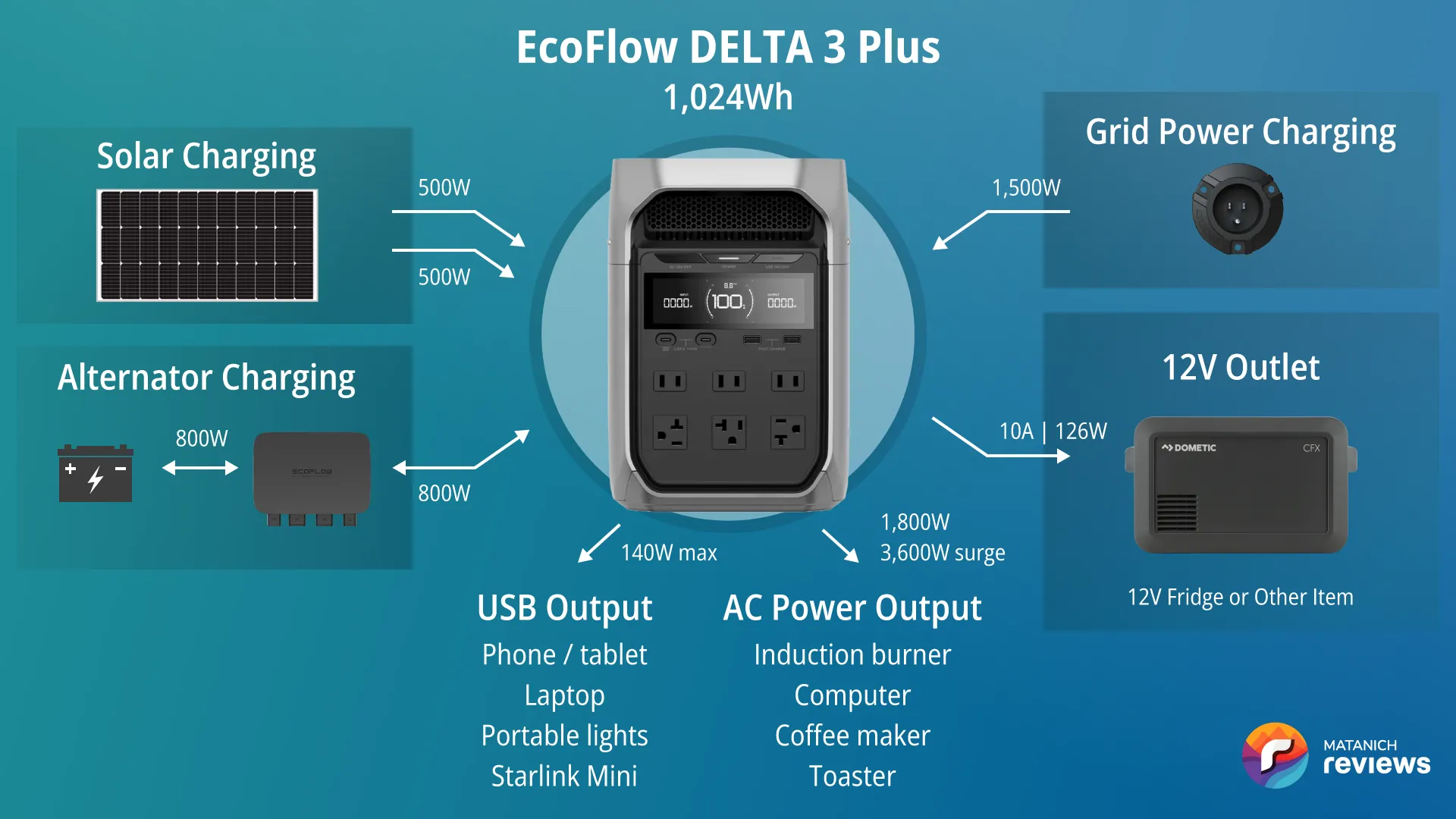
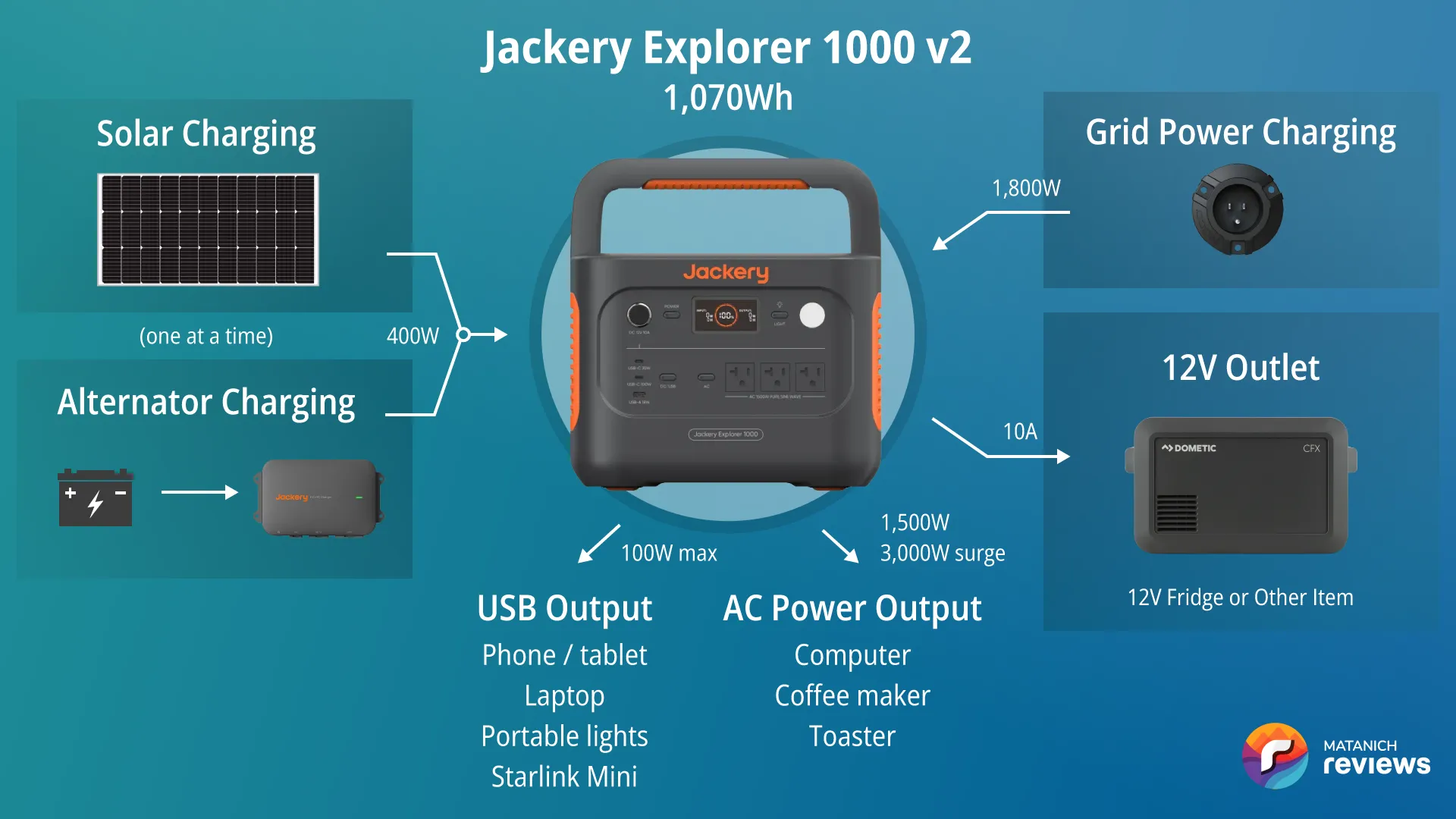
Portable stations with limited DC output (~10A) are the simplest option. They work well for basic camping and light electrical needs. These units tend to save the most time and cost because they require no wiring, no tools, and no installation. This gets you traveling sooner with fewer chances for mistakes and less stress during the build.
Considerations
- Not suitable for building a multi‑circuit 12V system
- DC output is intended for a single 12V device
- Usually cannot support diesel/gasoline heaters or water pumps
- Expansion batteries (if available) are limited and usually brand‑specific
- Internal components cannot be replaced or upgraded
Popular Basic Power Stations
This category includes a wide range of models and brands, especially smaller‑capacity units, and these are a few solid options to consider.
Products are sorted alphabetically by brand and then capacity.
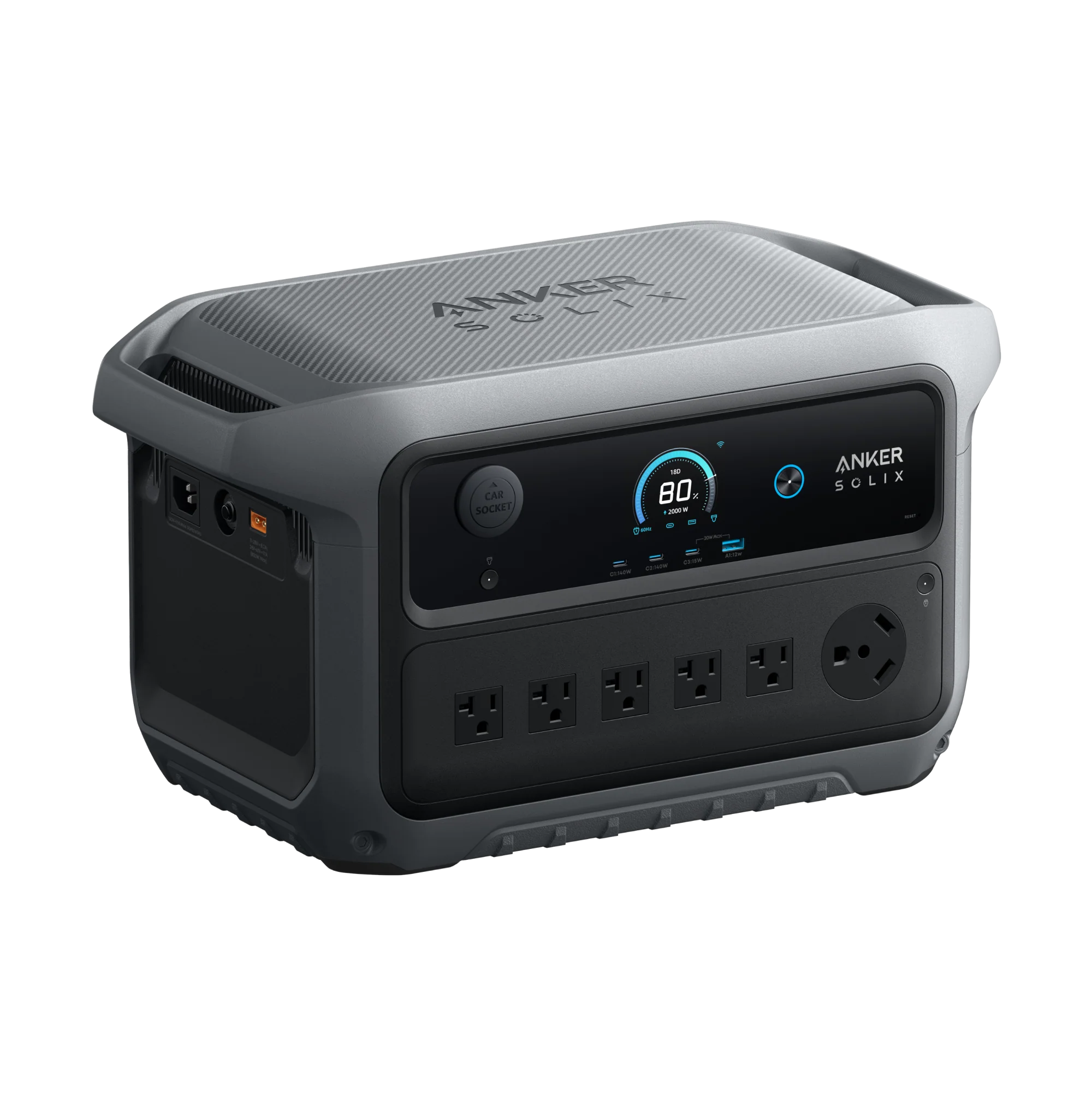
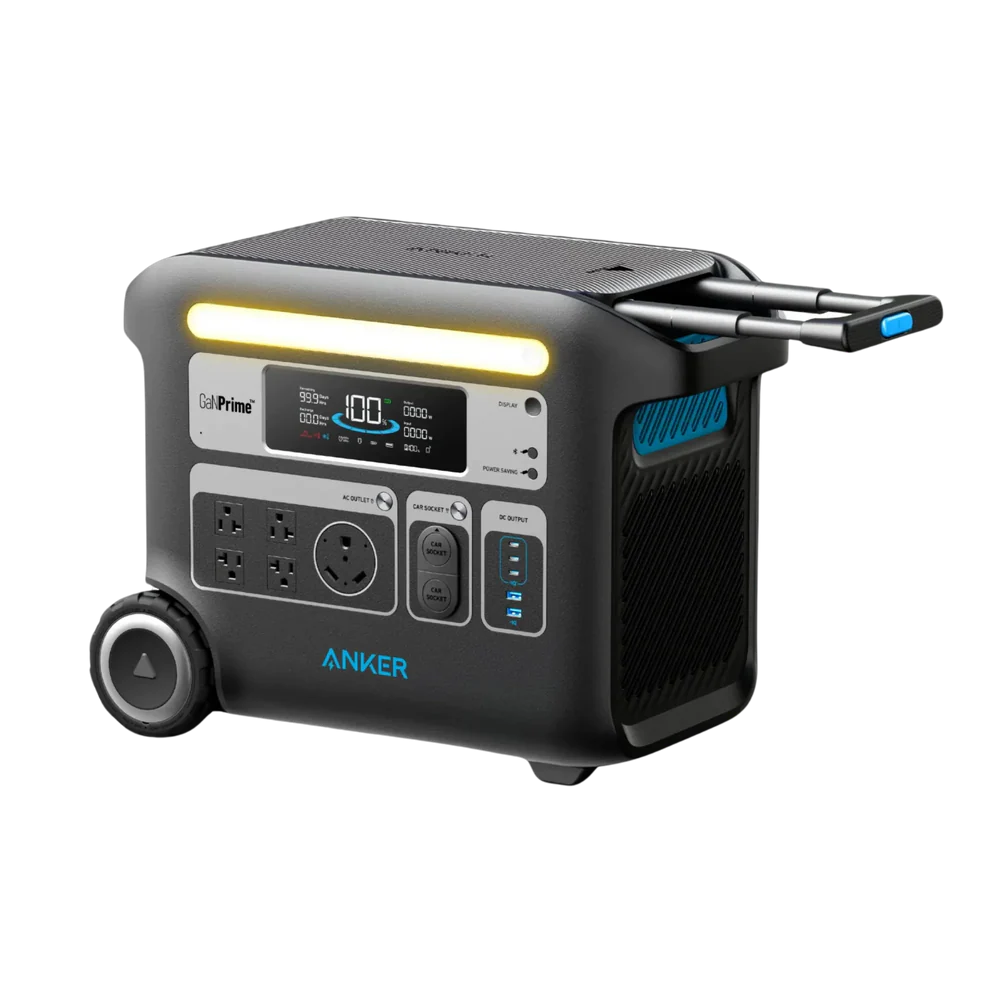
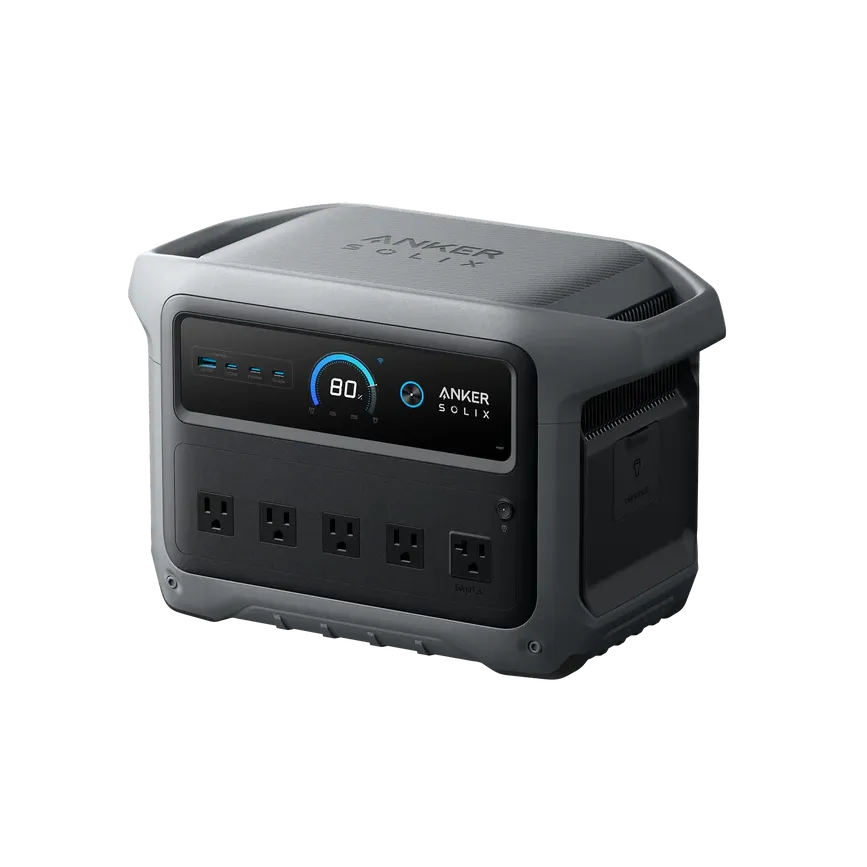
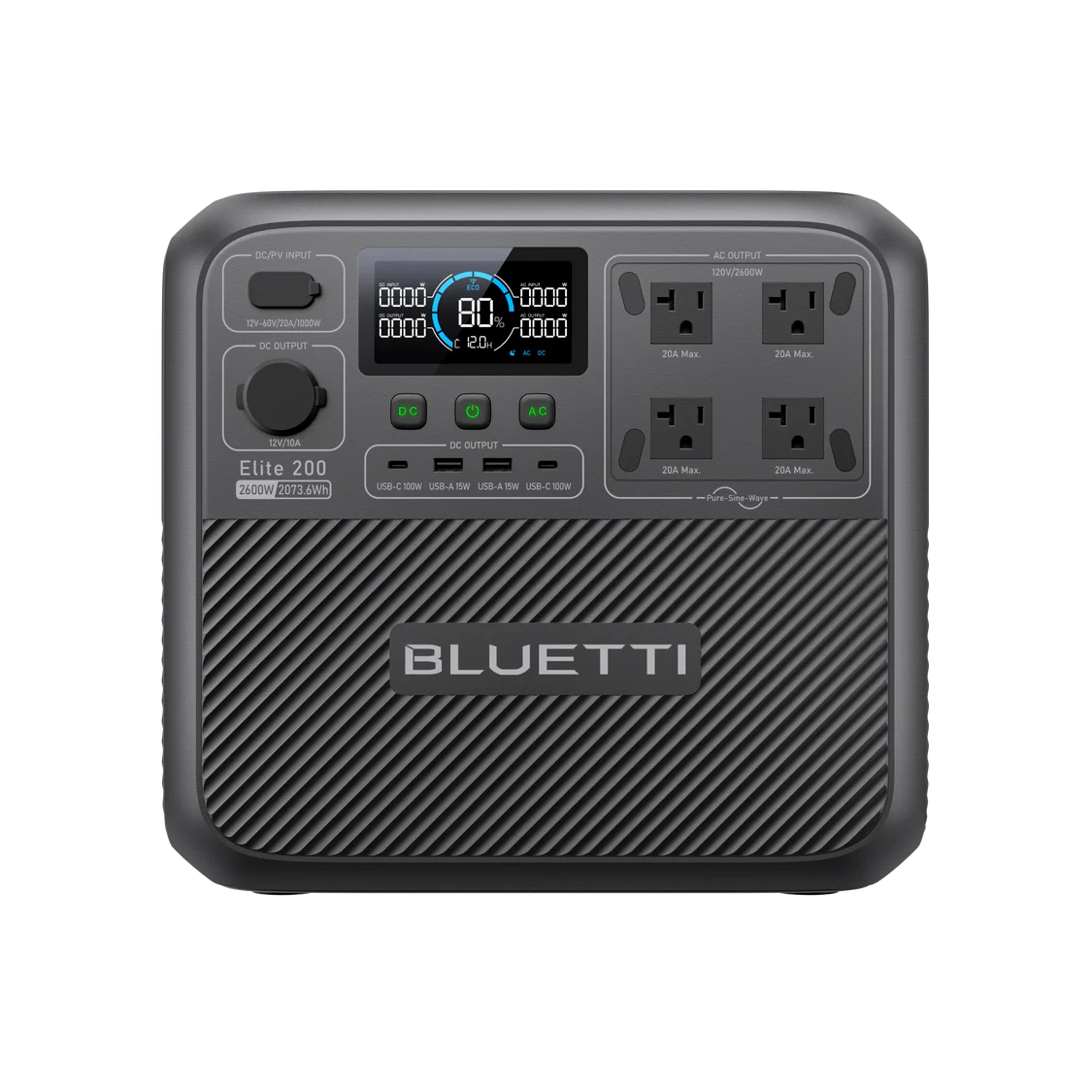
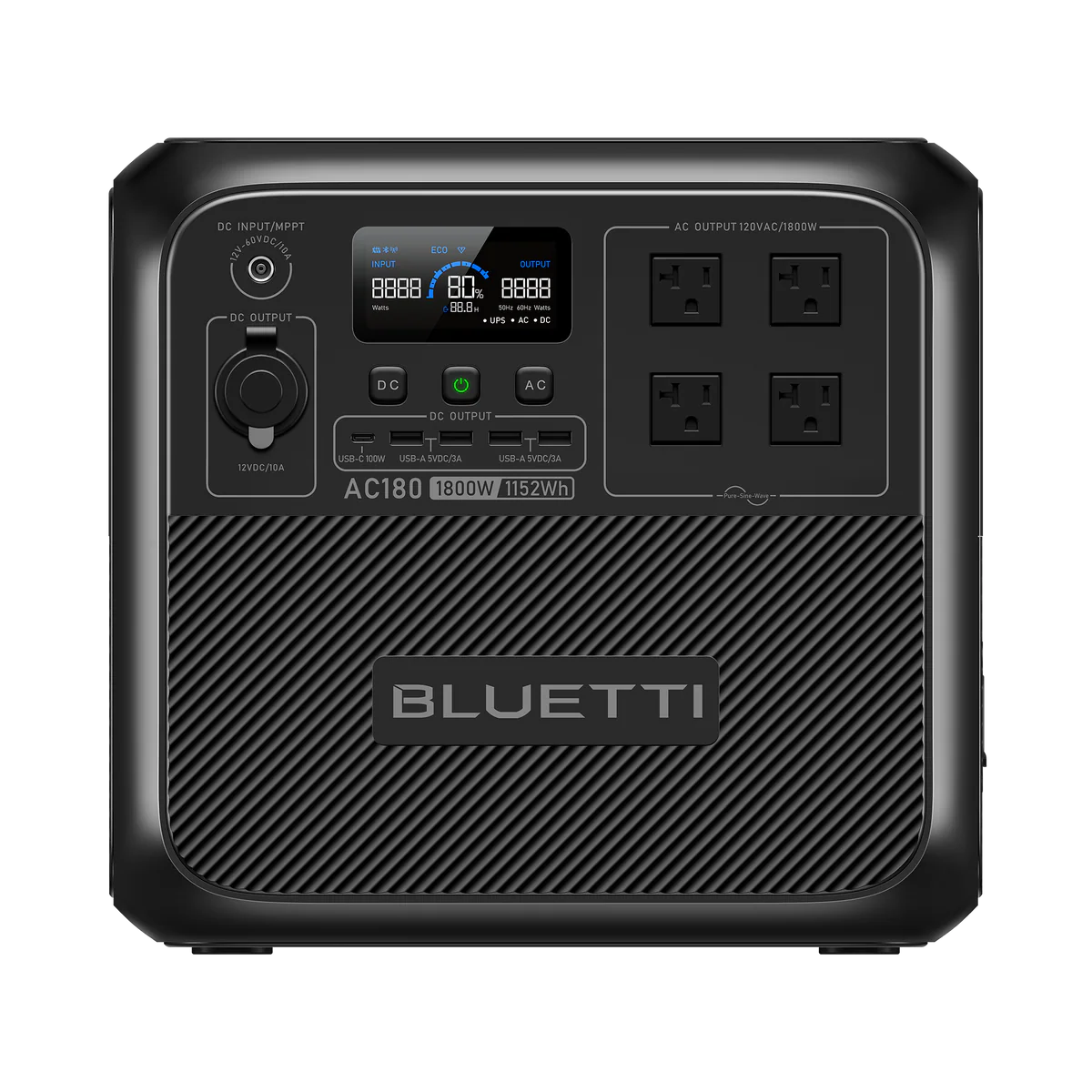
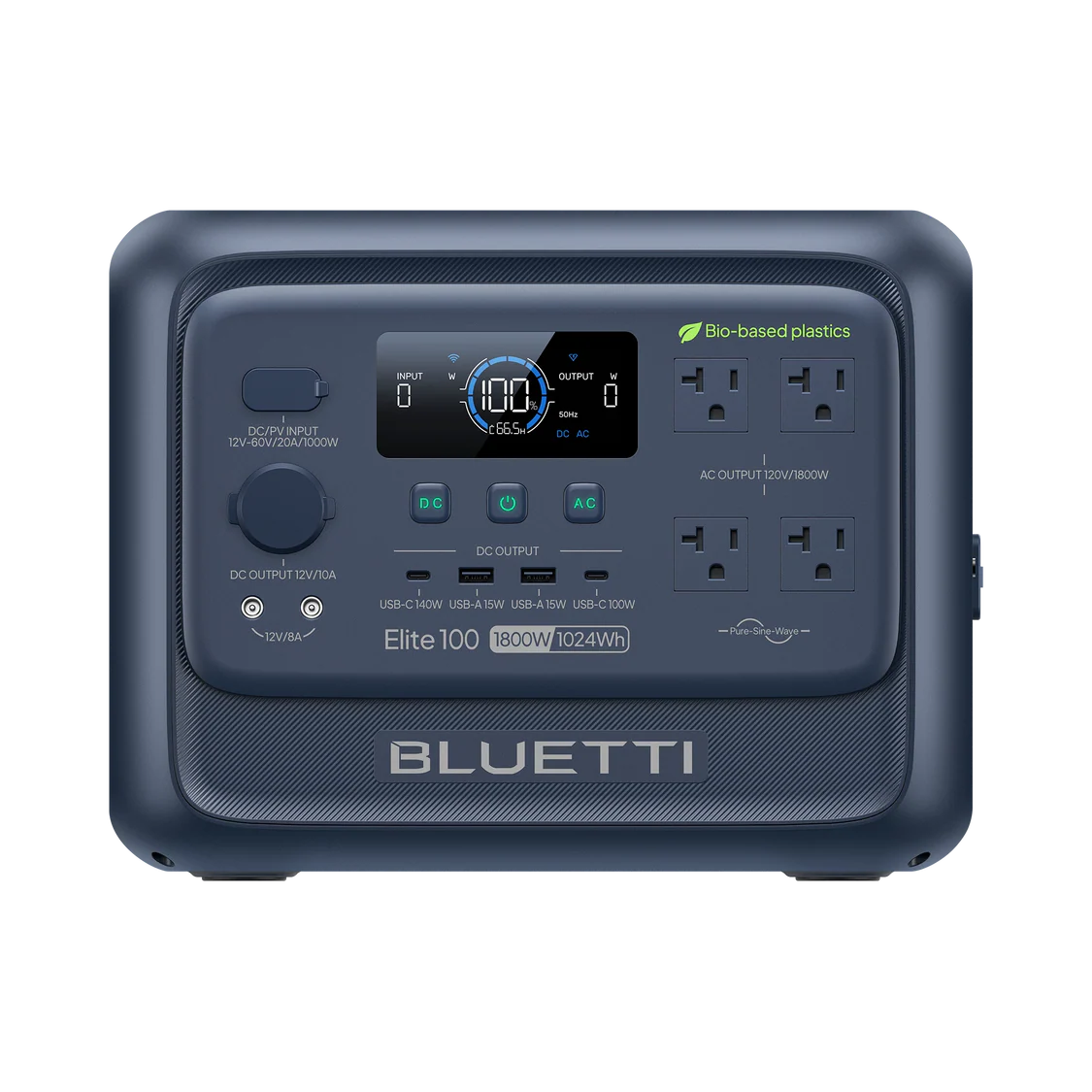
- Price
- $499
- Capacity
- 1,024Wh
- AC Output
- 1,800W
- DC Output
- 10A
- Solar
- 1,000W
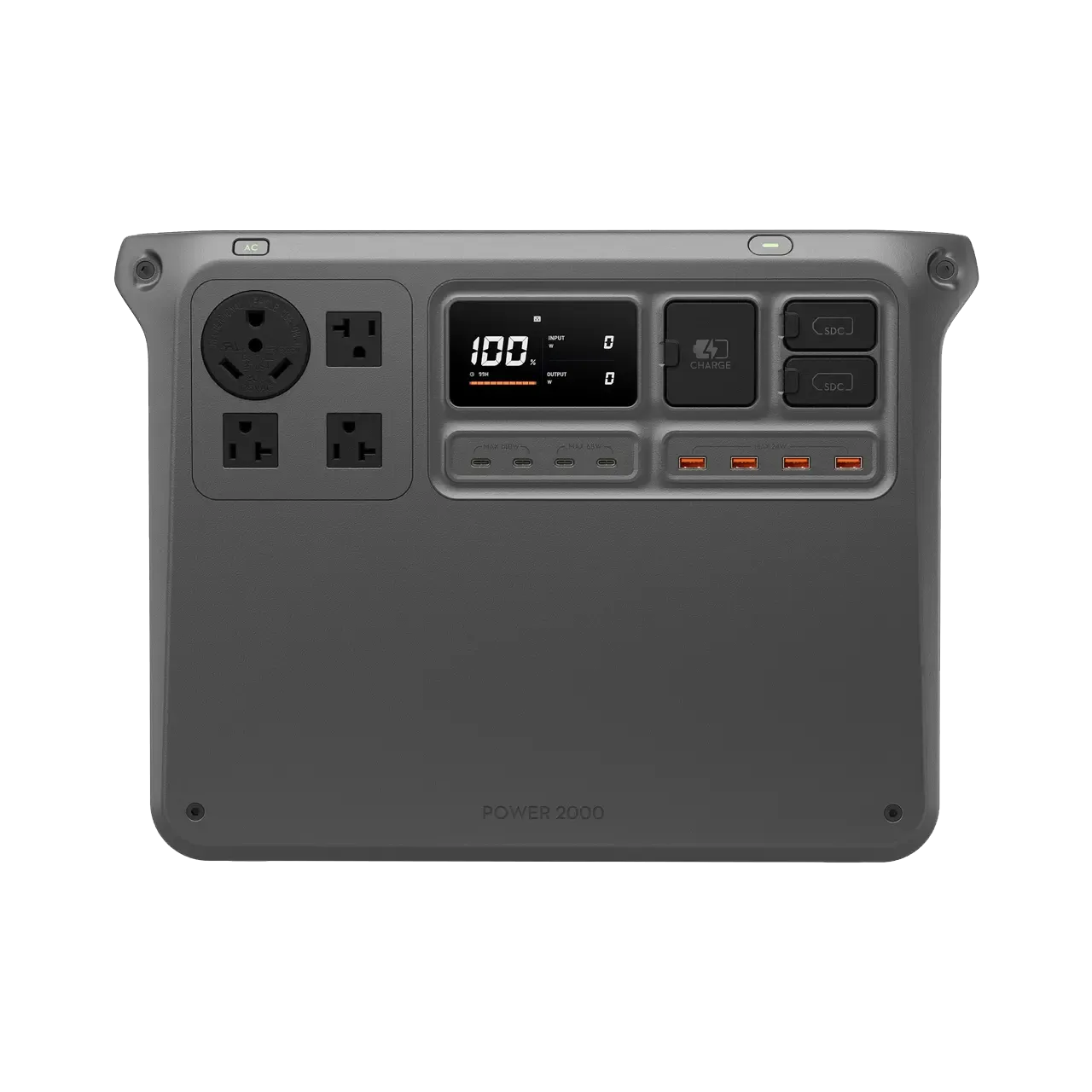
- Price
- $1,299
- Capacity
- 3,072Wh
- AC Output
- 3,600W
- DC Output
- 10A
- Solar
- 800W
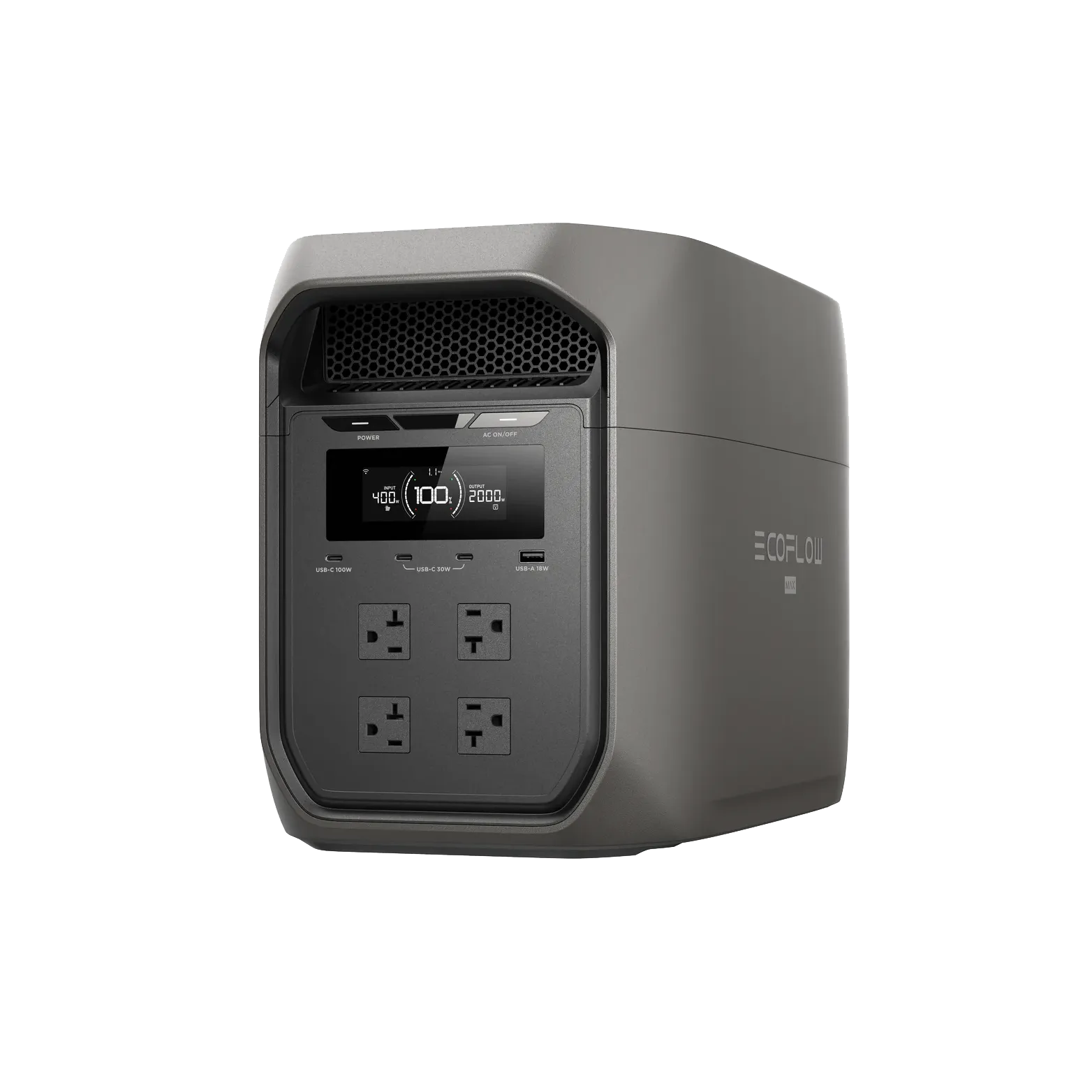
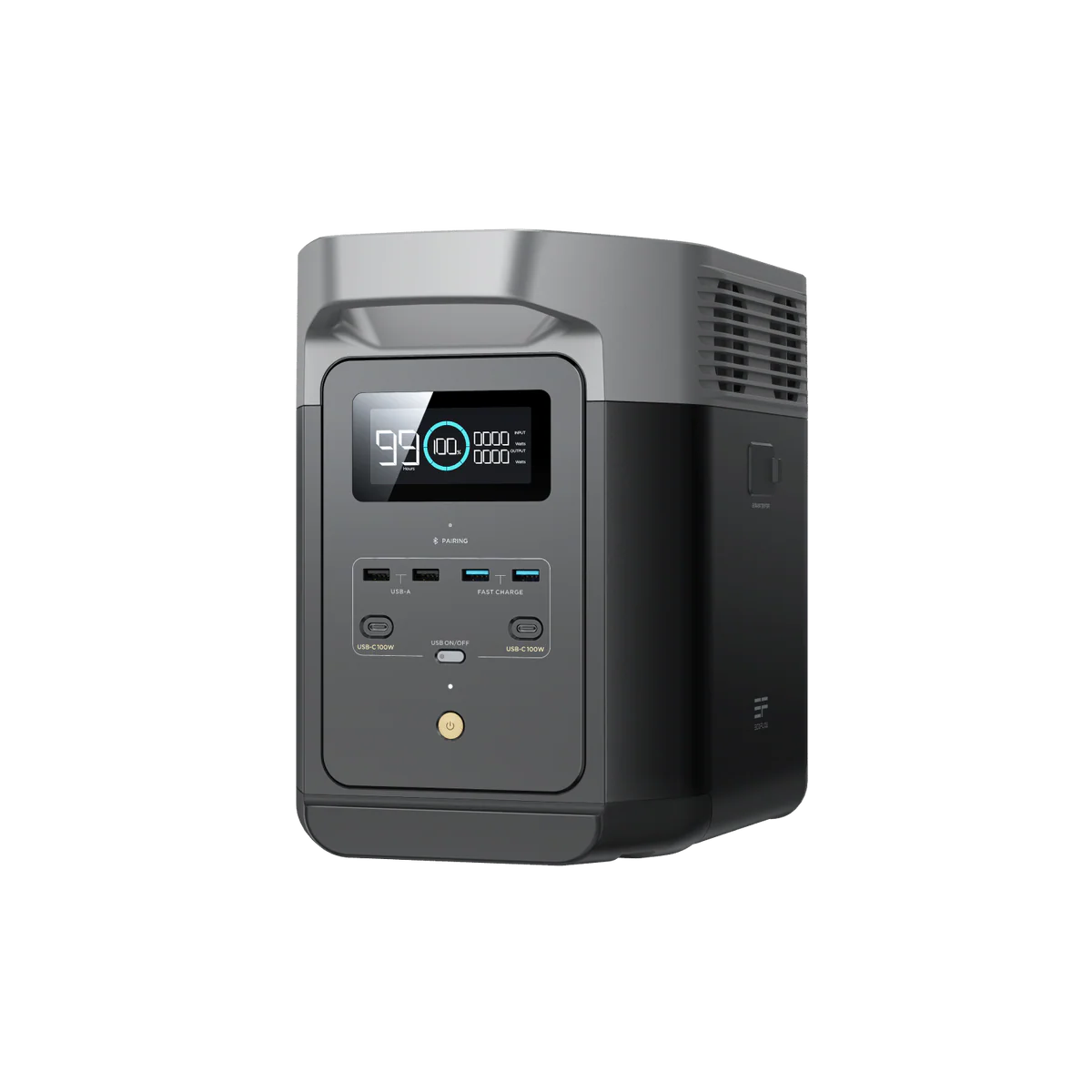
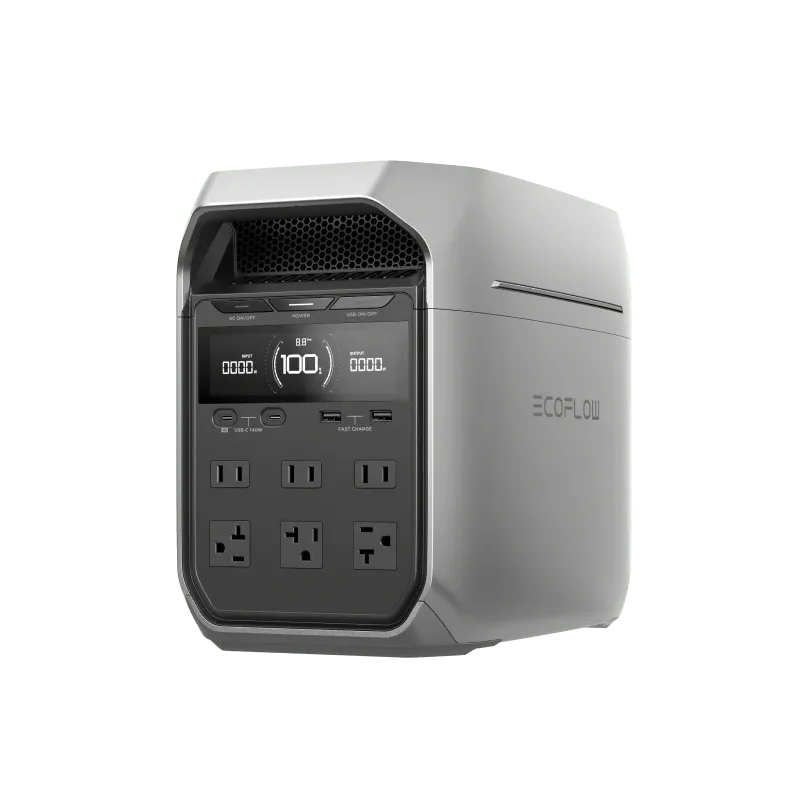
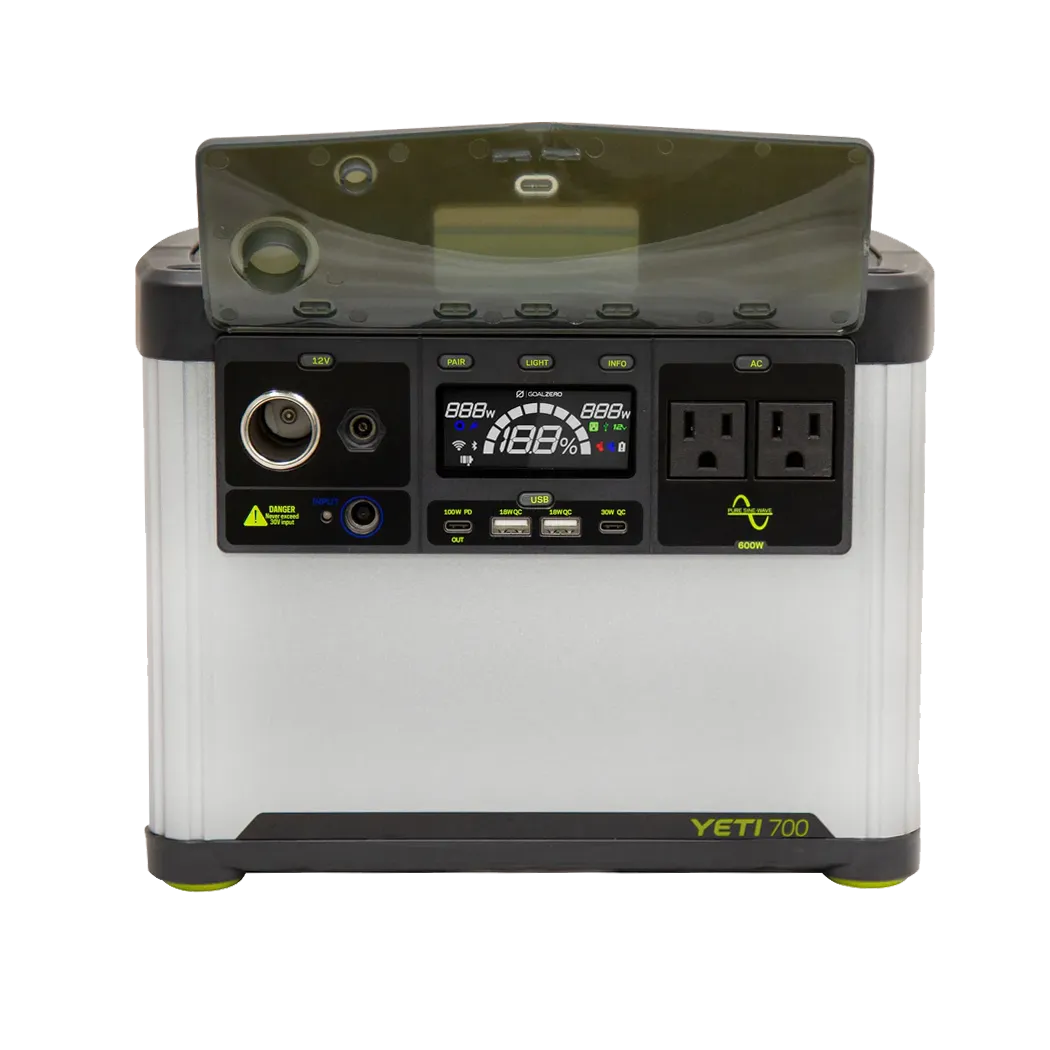
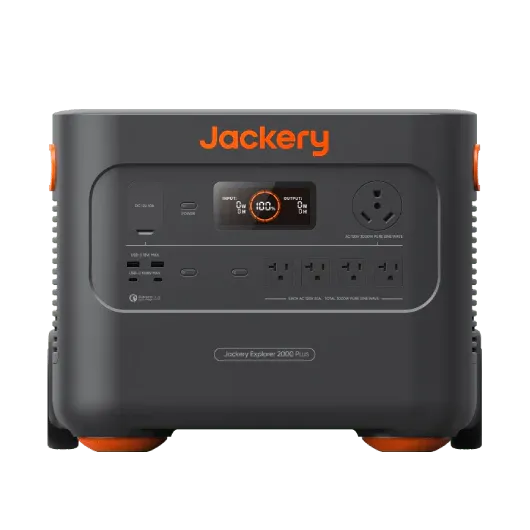
- Price
- $1,099
- Capacity
- 2,042Wh+
- AC Output
- 3,000W
- DC Output
- 10A
- Solar
- 1,400W 1
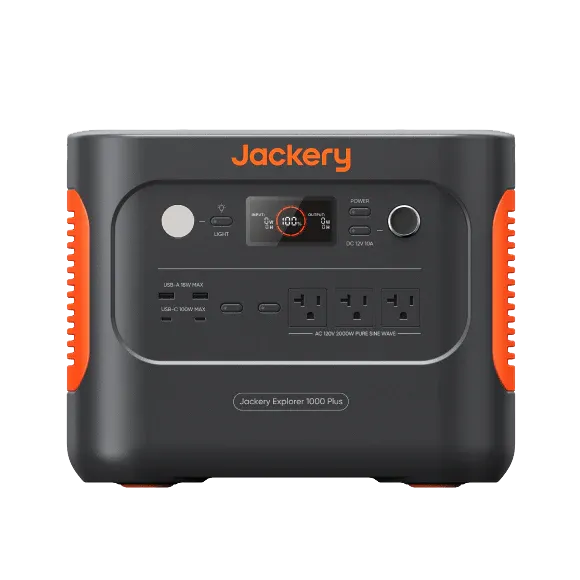
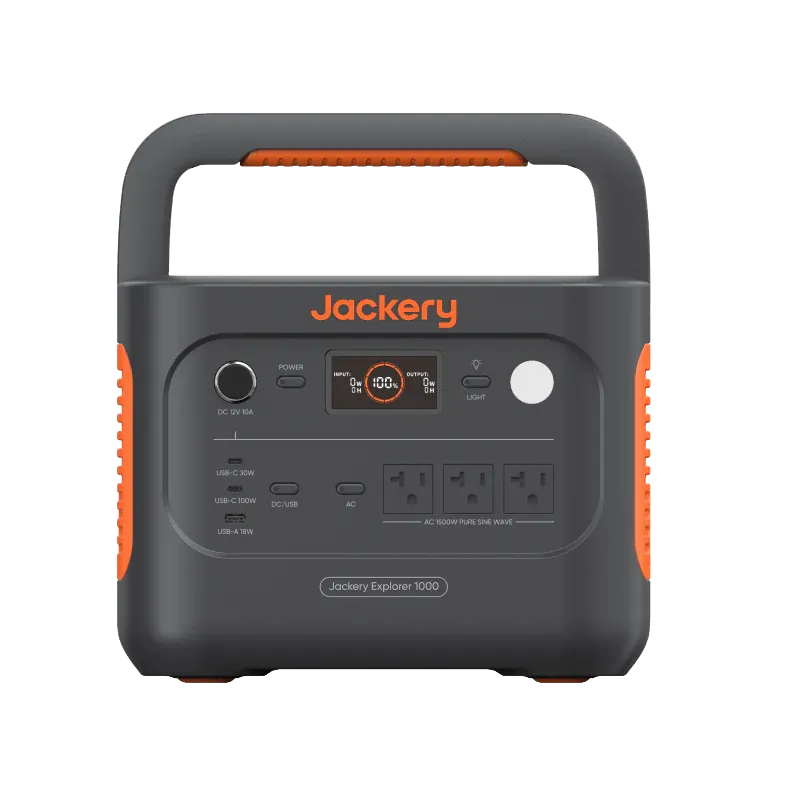
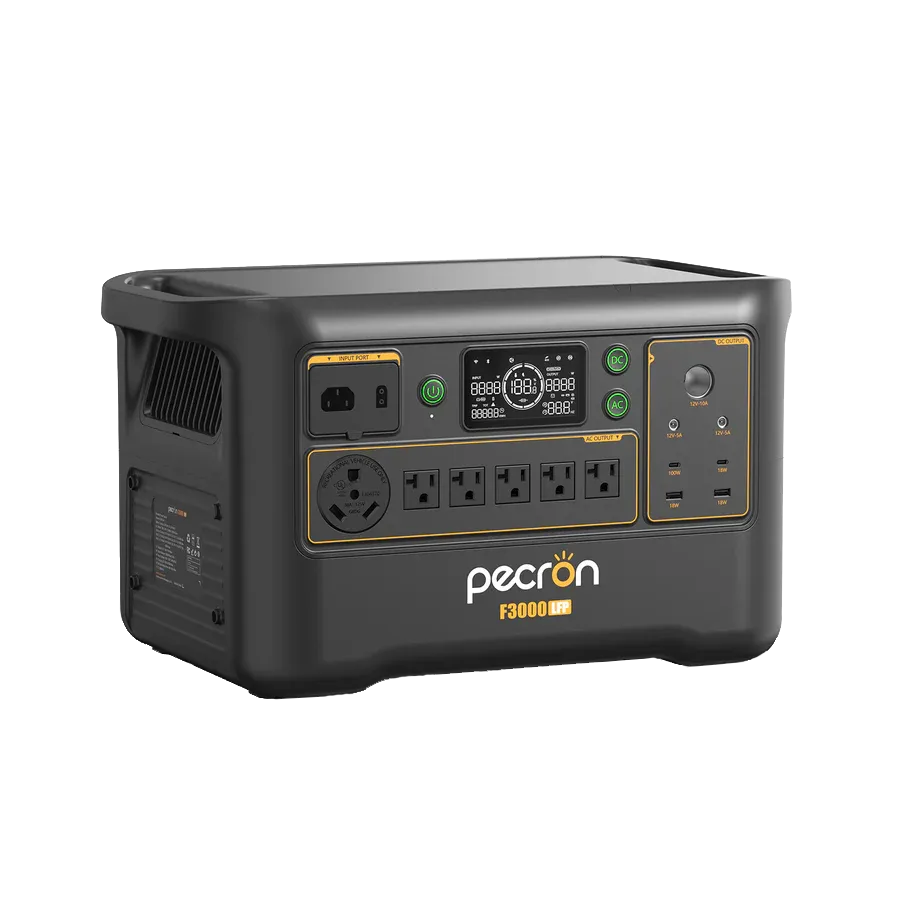
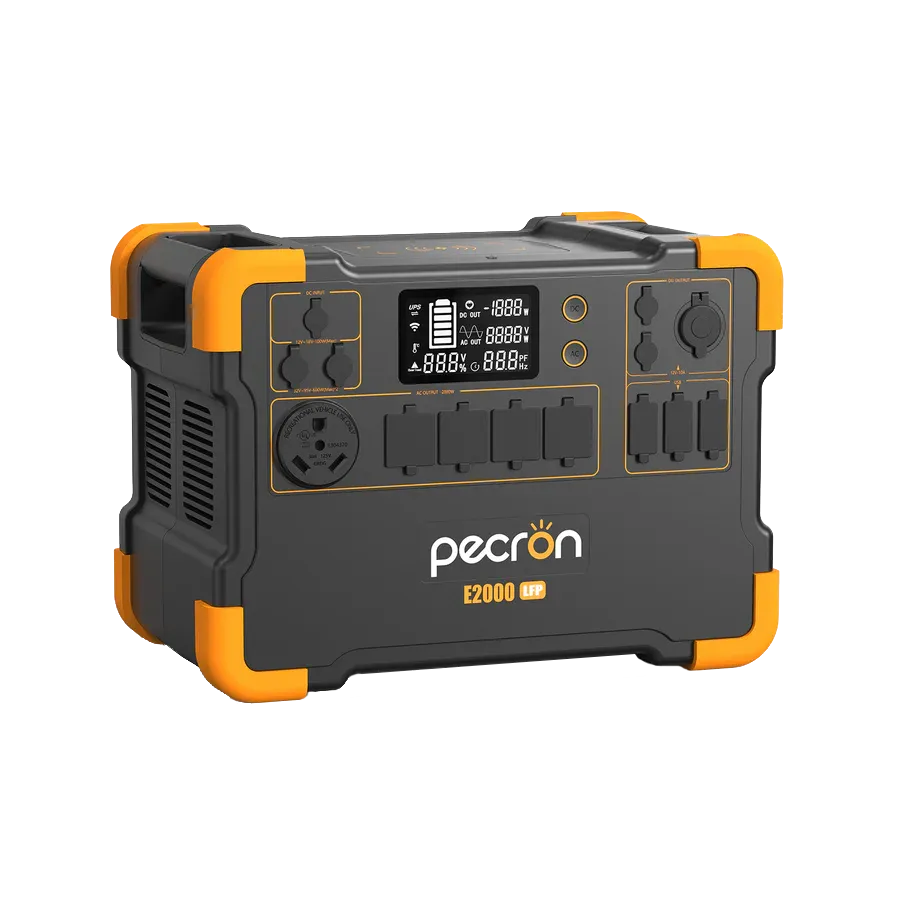
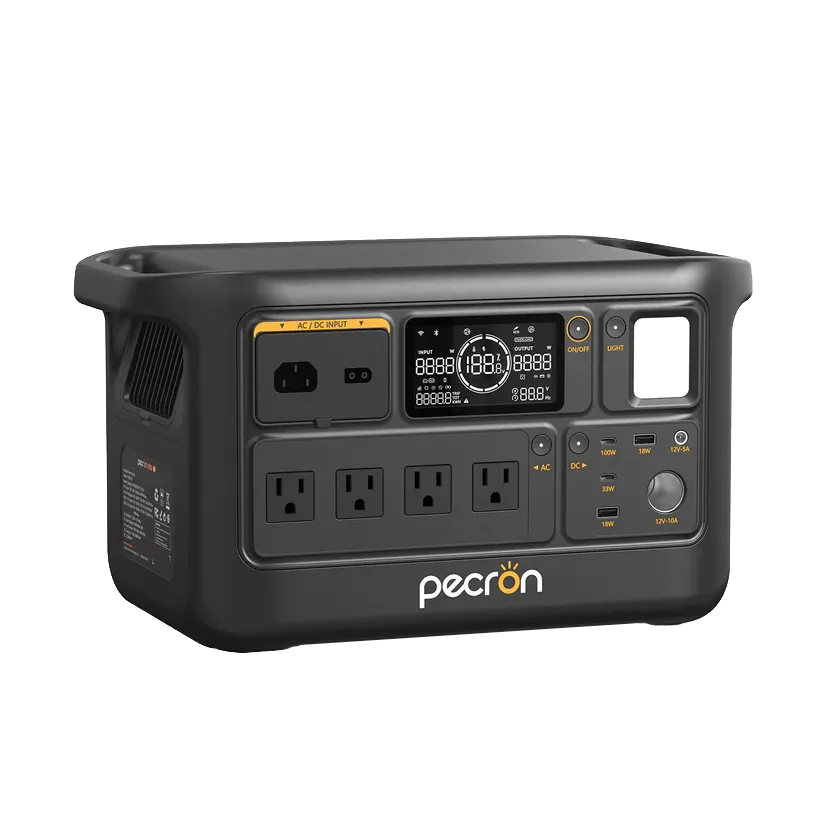
| Product | Price | Capacity | AC Output | DC Output | Solar |
|---|---|---|---|---|---|
| $799 | 2,048Wh+ | 2,400W | 10A | 800W | |
| $899 | 2,048Wh+ | 2,400W | 10A | 1,000W | |
| $428 | 1,024Wh | 2,000W | 10A | 600W | |
| $849 | 2,073.6Wh | 2,600W | 10A | 1,000W | |
| $499 | 1,152Wh+ | 1,800W | 10A | 500W | |
| $499 | 1,024Wh | 1,800W | 10A | 1,000W | |
| $749 | 2,048Wh+ | 3,000W | -- | -- | |
| $1,299 | 3,072Wh | 3,600W | 10A | 800W | |
| $799 | 2,048Wh | 2,400W | 10A | 500W | |
| $459 | 1,024Wh+ | 1,800W | 10A | 500W | |
| $599 | 1,024Wh+ | 1,800W | 10A | 500W (2x) | |
| $700 | 677Wh | 600W | 13.5A | 200W | |
| $1,099 | 2,042Wh+ | 3,000W | 10A | 1,400W 1 | |
| $999 | 1,264Wh+ | 2,000W | 10A | 800W 1 | |
| $499 | 1,070Wh | 1,500W | 10A | 400W 1 | |
| $799 | 3,072Wh+ | 3,600W | 10A | 1,600W | |
| $599 | 1,920Wh+ | 2,000W | 10A | 600W 100W | |
| $329 | 1,004Wh | 1,500W | 10A | 600W |
1. Jackery two ports combined total.
Custom Systems & DIY
Custom systems use individual components that you select and wire together, or that you have professionally built for you. They offer the most flexibility and performance, with complete control over layout, component choices, and how everything fits into your build. This approach takes significantly more planning and electrical knowledge if you build it yourself, and costs considerably more if you hire a shop.
Quality components, wiring, hardware, and tools add up quickly, making custom systems more expensive than many people expect. Modern all‑in‑one and modular systems now cover most use cases with far less complexity, and in many cases the cost of a custom system is enough to buy a second power station for redundancy when traveling far from services.
Building a custom system means selecting and wiring every component yourself. This includes the LiFePO4 battery bank, MPPT solar charge controller, inverter‑charger, DC‑DC alternator charger, solar panels, solar disconnect, battery monitor with shunt, main battery disconnect, fuse panels, breakers, ANL or Mega fuses and their holders, bus bars, distribution blocks, heavy‑gauge wiring, lugs, heat‑shrink, MC4 connectors, switches, and the tools needed to assemble and test everything. With so many parts involved, it’s easy for people to size something incorrectly or wire a connection the wrong way, and mistakes like loose lugs, undersized fuses, or poor grounding are common causes of electrical failures and fires in DIY builds.
Considerations
- Requires electrical knowledge, tools, and careful planning
- Introduces safety risks if components are installed or connected incorrectly
- Can be quite expensive when using quality components
- Longest installation time before the system is usable
A few popular brands
What I Use
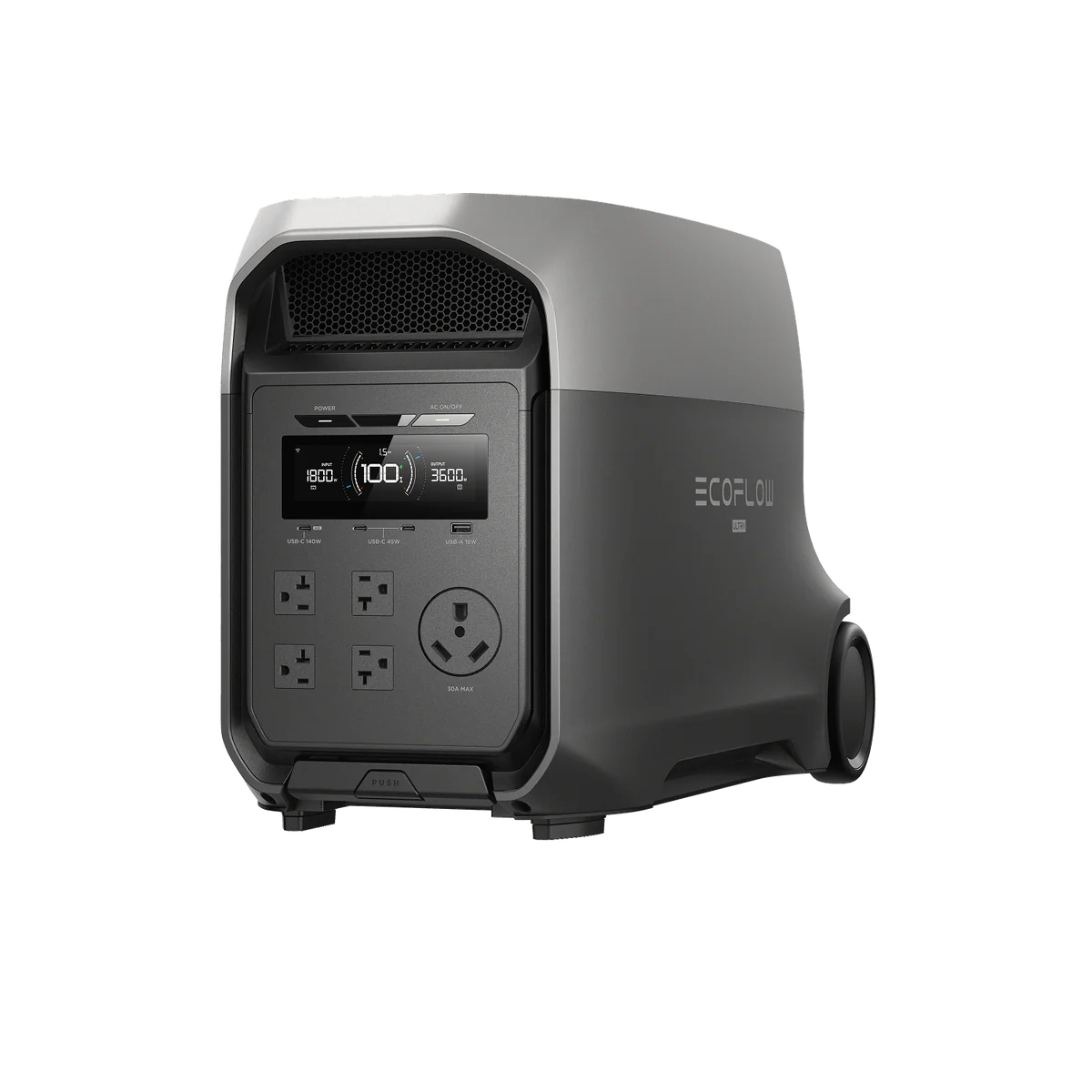
I currently use a portable power station with a high‑output 30A DC port. My setup is an EcoFlow Delta Pro paired with an 800W alternator charger and 600W of rooftop solar. It has been reliable for my needs and covers everything I run. Every brand has its own strengths and limitations, so the best choice depends on your requirements, budget, time, and skill. To learn more about me or the equipment I rely on, visit my vanlife build inventory and my about page.
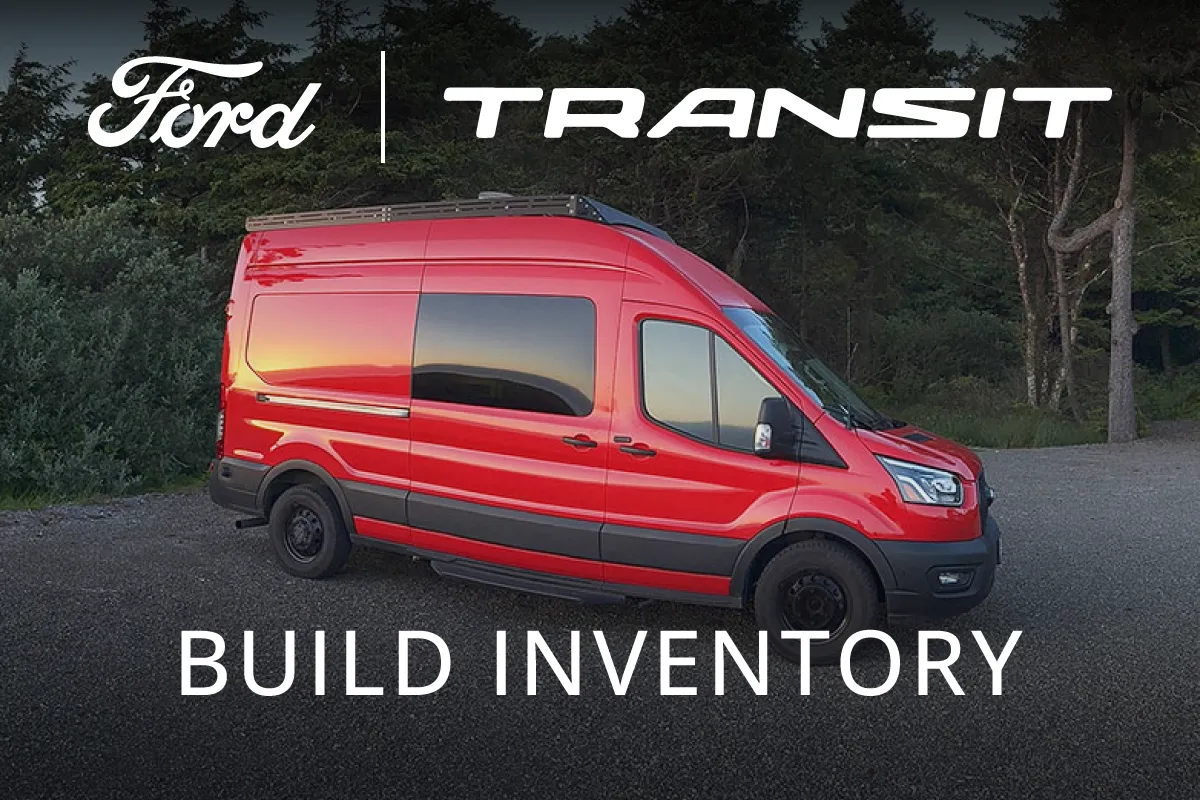
My Build Inventory
Ford Transit Vanlife Build
Summary
All‑in‑one power systems reduce the time, cost, and stress of building a van or RV electrical setup. They are safer, easier to install, and get you traveling sooner than custom or DIY builds. High‑output power stations and modular systems now cover most use cases that once required a full custom system, while custom and DIY builds still offer the most flexibility for people who want full control over every component.
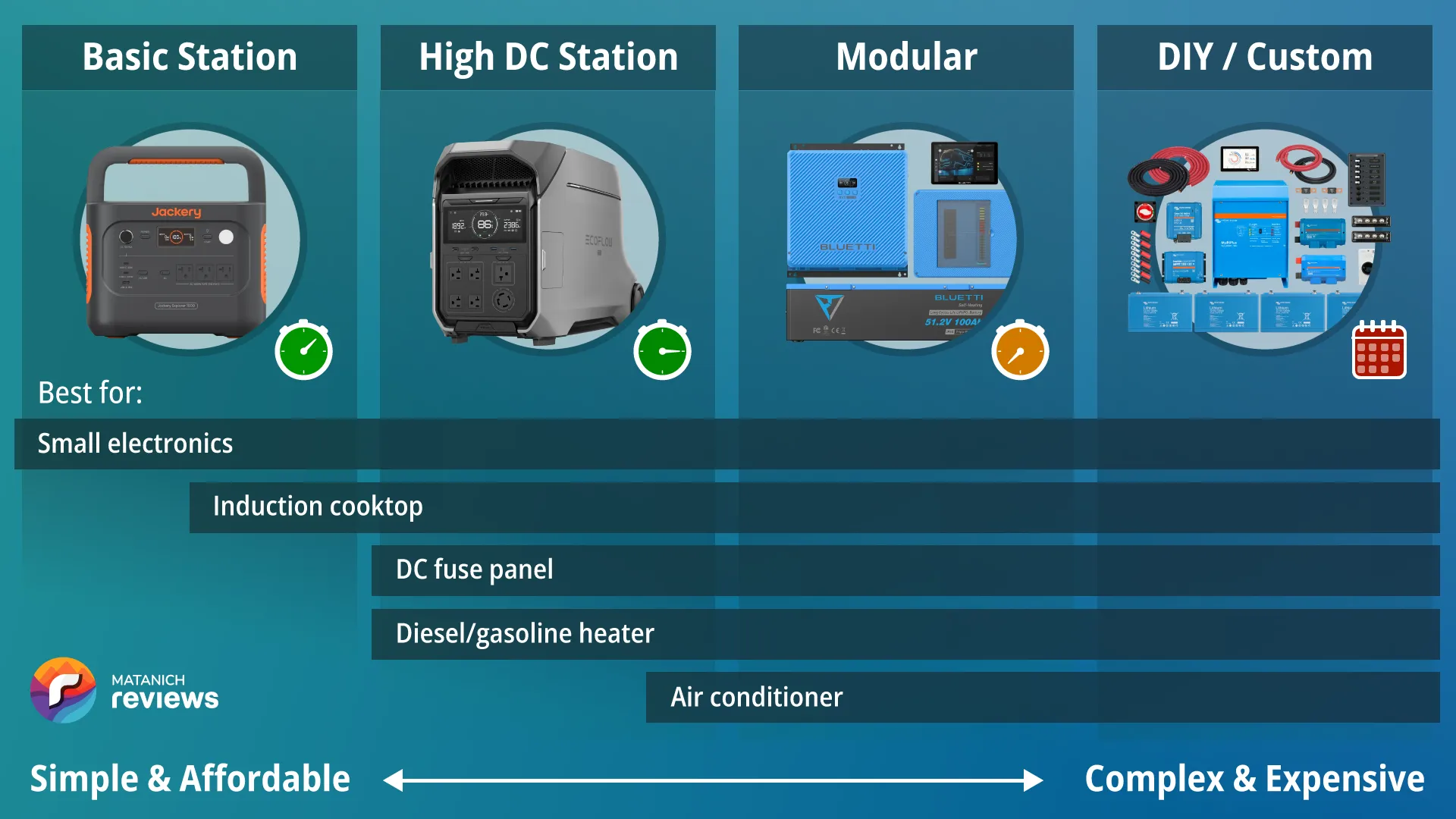
Choosing the right system is ultimately a balance of needs, time, cost, skill, stress, and convenience. The options below give you a quick way to match your priorities to the system type.
- Basic Power Station: Best for the simplest setups and single‑device 12V use.
- High‑DC Power Station: Best for a full 12V system with minimal wiring.
- Modular System: Best for a highly capable, high‑output DC system that’s easier to install than a custom build.
- Custom or DIY System: Best when you want maximum flexibility and full control over every component.
No matter which direction you choose, the right system is the one that fits your needs and supports your adventures.
Know a popular system that should be added to this list? Let me know